
Quick answer: Low-quality LED displays usually cut costs on LEDs, driver ICs, power supplies and cabinets, and skip aging tests and calibration. Ask for component brands, 72-hour aging test records, calibration reports, certificates (CE, RoHS, etc.) and real project references before you buy.
The global LED market contains huge quality differences.
Two screens with similar specifications may perform completely differently after installation.
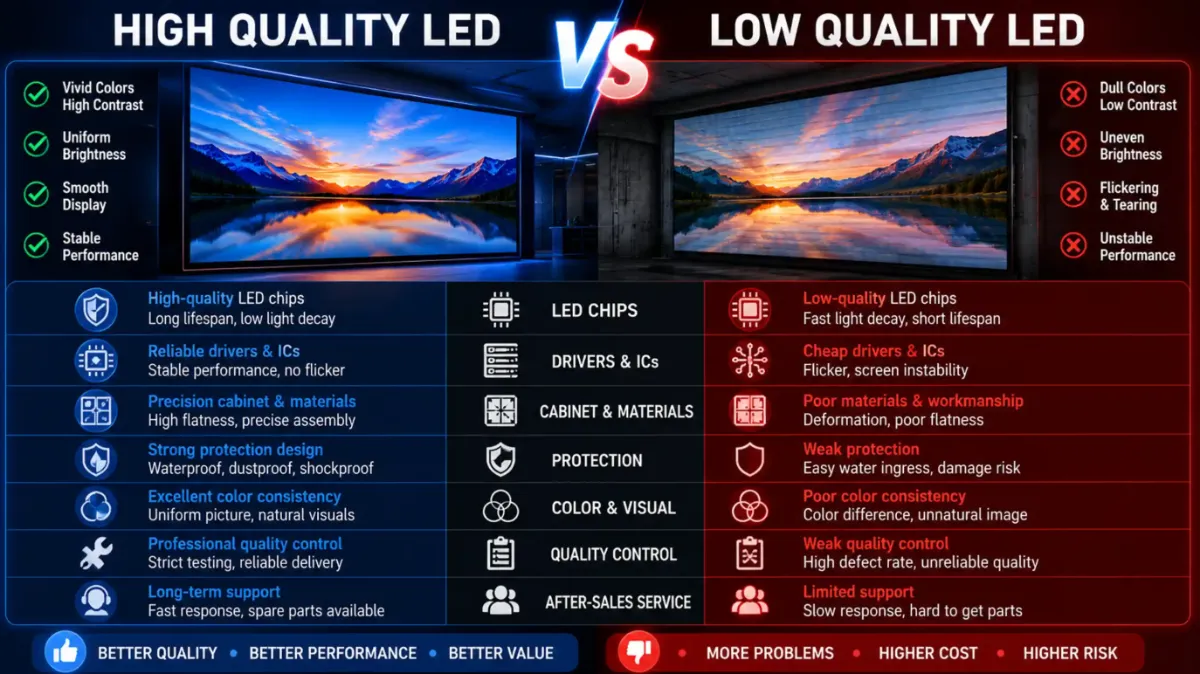
Common Signs of Low-Quality LED Products
Low-quality systems often show:
- inconsistent Helligkeit
- Farbwechsel
- unstable refresh rate
- poor cabinet flatness
- Überhitzung
- weak waterproofing
These problems may not appear immediately, but often become visible after months of operation.
Why Cheap Products Often Create Long-Term Risk
Very low-cost products may reduce quality in areas such as:
- Stromversorgungen
- Treiber-ICs
- PCB materials
- structural precision
- thermal design
This becomes especially risky in:
- Außenwerbetafeln
- XR-Produktion
- Kommandozentralen
luxuriöse gewerbliche Umgebungen
Why Factory Capability Matters
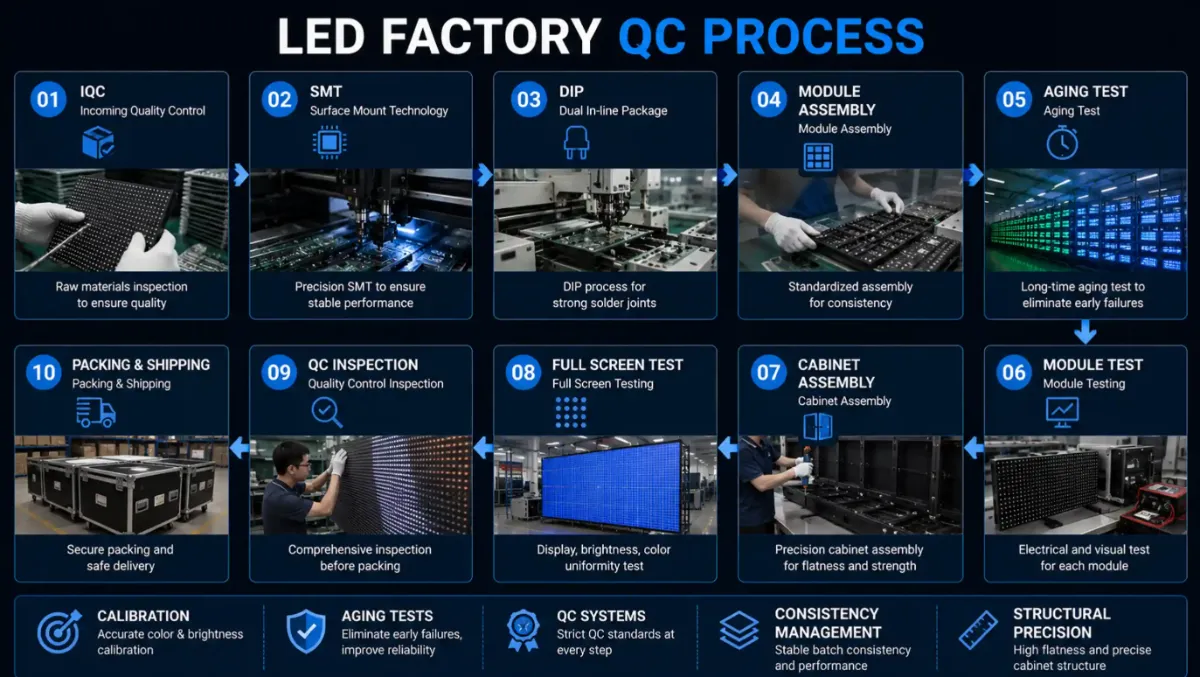
Professional LED factories usually maintain stronger control over:
- calibration
- aging tests
- QC systems
- consistency management
- structural precision
DDW Engineer Notes: Avoiding low-quality LED displays
Many low-cost LED products initially look acceptable during short demonstrations.
However, long-term reliability often reveals the true difference between engineering-grade systems and low-end products.
LED Display Quality Checklist
| Check | What Good Looks Like |
|---|---|
| LEDs and driver ICs | Named, reputable brands; high-refresh ICs |
| Stromversorgungen | Branded, with safety certificates and margin |
| Schrank | Flat, precise die-cast or quality steel |
| Aging test | Around 72 hours before shipment |
| Calibration | Point-by-point calibration report |
| Factory | Visitable production, QC process, references |
FAQ
How can I check LED display quality before buying?
Request component lists, aging test and calibration reports, certificates, samples and references, or audit the factory.
Why do cheap LED screens fail early?
They often use low-grade LEDs, weak power supplies and skip aging tests, leading to dead pixels, color shifts and failures.
What certificates should an LED display have?
Common ones include CE, RoHS, FCC and ETL/UL depending on the market.
Related LED Display Guides
- How to choose an LED display supplier
- LED display warranty guide
- LED display price factors
- LED screen lifespan
Recommended DDW products: KCOB Series COB LED video wall · QDCOB Series COB LED display