
Quick answer: A wall-mounted LED display is fixed to a load-bearing wall with a steel frame or direct mounting brackets. Check that the wall can carry the screen weight (typically 25–40 kg/m² for indoor cabinets), use front-service cabinets when there is no rear access, and leave space for ventilation and cable routing.
Wall-mounted LED displays are widely used in:
- قاعات المؤتمرات
- متاجر البيع بالتجزئة
- جماعات الضغط التابعة للشركات
- مراكز القيادة
- الكنائس
- صالات عرض الفخامة
Compared with rental installations, wall-mounted systems usually focus more on:
- space efficiency
- clean appearance
- الاستقرار على المدى الطويل
- maintenance accessibility
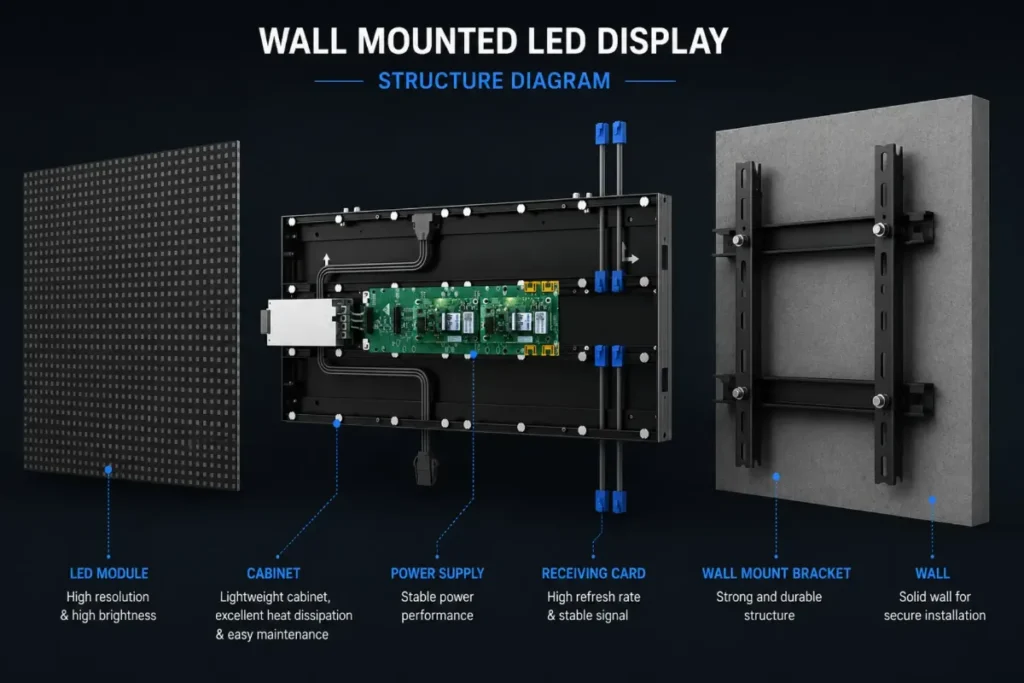
Why Wall Structure Matters More Than Many Customers Expect
Many customers focus mainly on screen size and pixel pitch.
However, in real projects, wall structure often becomes one of the biggest engineering challenges.
مخصص بشكل خاص لـ:
- concrete walls
- drywall structures
- glass walls
- decorative interiors
Poor wall support may eventually cause:
- cabinet deformation
- alignment issues
- الاهتزاز
- long-term structural instability
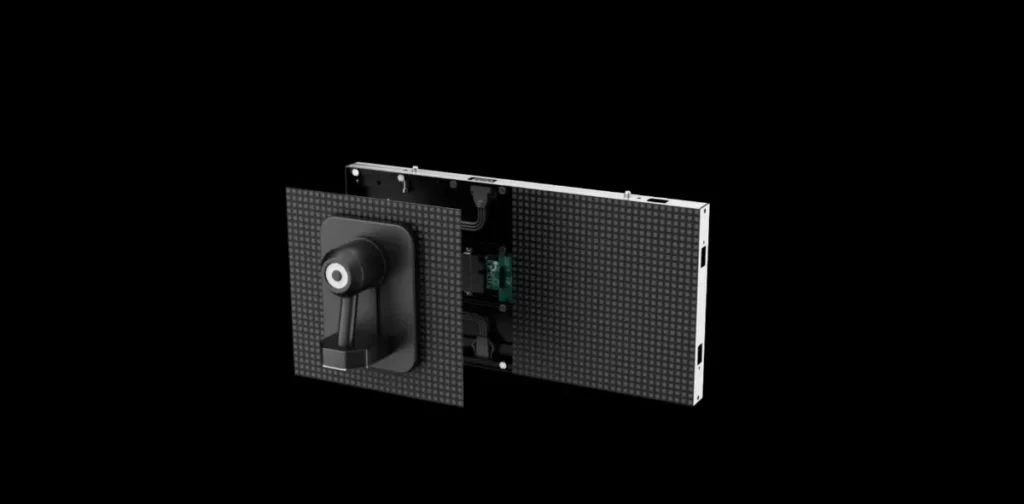
Why Front Maintenance Is Becoming Mainstream
In many indoor commercial environments, there is very limited rear maintenance space.
This is why modern wall-mounted LED systems increasingly use:
- front service modules
- magnetic maintenance
- vacuum maintenance tools
لا سيما في:
- متاجر التجزئة الفاخرة
- قاعات اجتماعات مجالس إدارة الشركات
- المتاحف
- مراكز التسوق
rear maintenance access is often impossible.
Why Flatness Directly Affects Premium Appearance
In close-viewing environments, even small cabinet misalignment becomes very visible.
ويعد هذا الأمر بالغ الأهمية بشكل خاص في:
- قاعات اجتماعات ذات تباعد ضيق بين المقاعد
- luxury retail spaces
- استوديوهات البث
- بيئات XR
This is why premium wall-mounted systems usually require:
- precision cabinet structure
- accurate installation leveling
- stable mounting systems
Wall-Mounted LED Screen Installation Checklist
- Confirm wall material and load capacity with a structural engineer (concrete or steel preferred; avoid drywall alone).
- Install a leveled steel frame or mounting plates; keep flatness within about ±1 mm.
- Plan power and signal cable routes before mounting cabinets.
- Choose front-service cabinets if the wall leaves no rear walkway.
- Leave ventilation gaps or add fans for enclosed recesses.
- Calibrate seams and brightness after mounting.
DDW Engineer Notes: Wall-mounted LED display installation
Many indoor LED projects initially look excellent after installation.
However, poor structural support may slowly create alignment problems after months of operation.
In premium indoor environments, installation precision is often just as important as image quality itself.
FAQ
How much weight can a wall hold for an LED display?
It depends on the wall. Concrete and steel structures usually carry LED displays easily, while drywall needs a separate steel frame. Always have a structural engineer confirm the load.
Do wall-mounted LED screens need front service?
Usually yes. When the screen is fixed flat against a wall, front-service cabinets let technicians replace modules without removing the display.
How far from the wall should an LED display be mounted?
Typically 50–200 mm, depending on the frame, to allow for cabling and airflow; recessed installations may need active ventilation.
Related LED Display Guides
- Front service vs rear service LED display
- LED screen cabinet materials
- LED screen power distribution guide
- Hanging LED screen installation
- LED display daily maintenance checklist
- LED screen installation cost and timeline
Recommended DDW products: FU Series indoor LED display · FA Series outdoor LED screen