
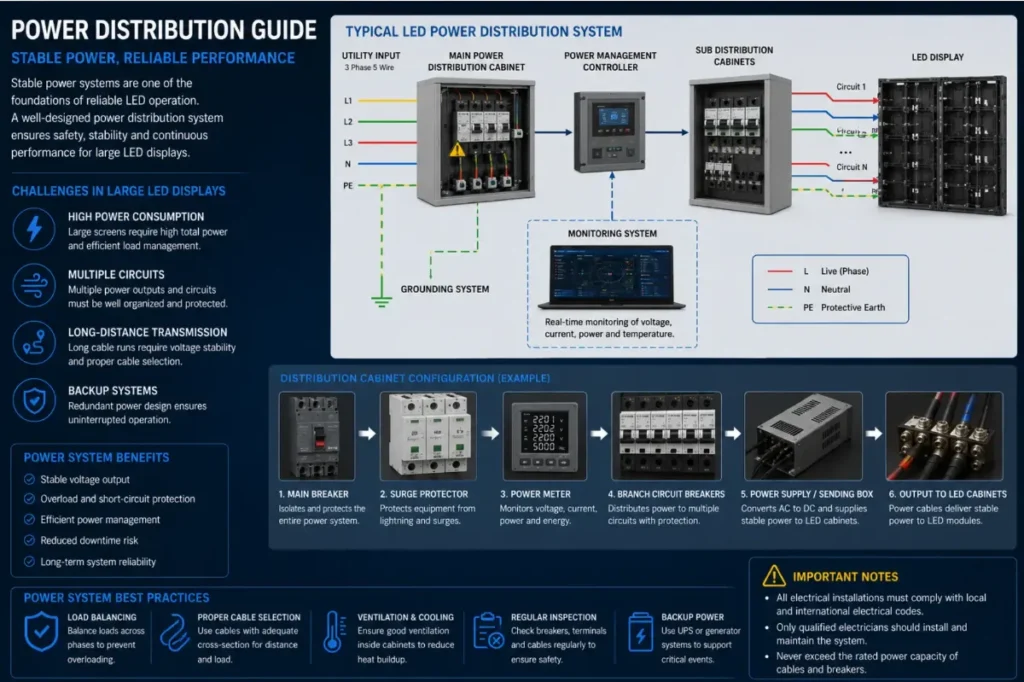
Quick answer: LED screen power distribution splits the display load across several protected circuits, usually from a three-phase supply through a power distribution cabinet. Design for maximum power but expect average consumption around one-third of maximum, add sequential power-on to avoid inrush current, and ground the system properly.
स्थिर विद्युत प्रणालियाँ विश्वसनीय एलईडी संचालन की नींव में से एक हैं।.
बड़े एलईडी डिस्प्ले में अक्सर शामिल होते हैं:
- उच्च बिजली खपत
- कई सर्किट
- लंबी दूरी का विद्युत प्रसारण
- बैकअप प्रणालियाँ
पावर स्थिरता क्यों मायने रखती है
अस्थिर बिजली के कारण हो सकते हैं:
- चमक में उतार-चढ़ाव
- signal interruption
- पावर सप्लाई की क्षति
- मॉड्यूल अस्थिरता
यह विशेष रूप से निम्नलिखित में महत्वपूर्ण हो जाता है:
- आउटडोर विज्ञापन
- एक्सआर स्टूडियोज़
- कमांड सेंटर
- लाइव इवेंट्स
बड़ी स्क्रीन को बहु-परिपथ वितरण की आवश्यकता क्यों होती है
बड़े एलईडी सिस्टम आमतौर पर लोड दबाव कम करने के लिए बिजली को कई सर्किटों में विभाजित करते हैं।.
पेशेवर परियोजनाओं में अक्सर शामिल होते हैं:
- परिपथ संतुलन
- स्वतंत्र सुरक्षा
- बैकअप प्रणालियाँ
- ओवरवोल्टेज सुरक्षा
Power Planning Example
A 20 m² outdoor LED display with a maximum power of 800 W/m² needs about 16 kW at peak, while average consumption is typically around 5–6 kW. The load is balanced across three phases, split into several circuits with their own breakers, and switched on in sequence by a power distribution cabinet with surge protection and a ground connection.
DDW Engineer Notes: LED screen power distribution
कई बाहरी परियोजनाओं में, पावर क्वालिटी सीधे दीर्घकालिक प्रदर्शन स्थिरता को प्रभावित करती है।.
विशेष रूप से अस्थिर विद्युत अवसंरचना वाले क्षेत्रों में, उचित बिजली वितरण अत्यंत महत्वपूर्ण हो जाता है।.
FAQ
How much power does an LED screen use?
It varies by product. Indoor LED screens often draw around 150–300 W/m² on average, while outdoor LED displays can average 250–450 W/m² and peak much higher.
Why does an LED display need sequential power-on?
Switching many power supplies on at once creates a large inrush current that can trip breakers. Sequential power-on switches circuits one by one.
Does an LED screen need grounding?
Yes. Proper grounding protects people and electronics, reduces interference and is required for lightning and surge protection.
Related LED Display Guides
- LED display signal connection guide
- Outdoor LED display structure guide
- LED display moisture protection
- LED screen lifespan
- LED screen power supply failure
Recommended DDW products: FC Series energy-saving outdoor LED screen · FA Series outdoor LED screen