One of the biggest misunderstandings in the LED display industry is that many first-time buyers think LED screens are simply “larger TVs”.
In real projects, a professional LED display is actually a complete visual engineering system involving display technology, structural engineering, signal processing, thermal management, power distribution, installation environment, maintenance access, and long-term stability.
That is also why two screens with similar specifications can perform completely differently once installed on-site.
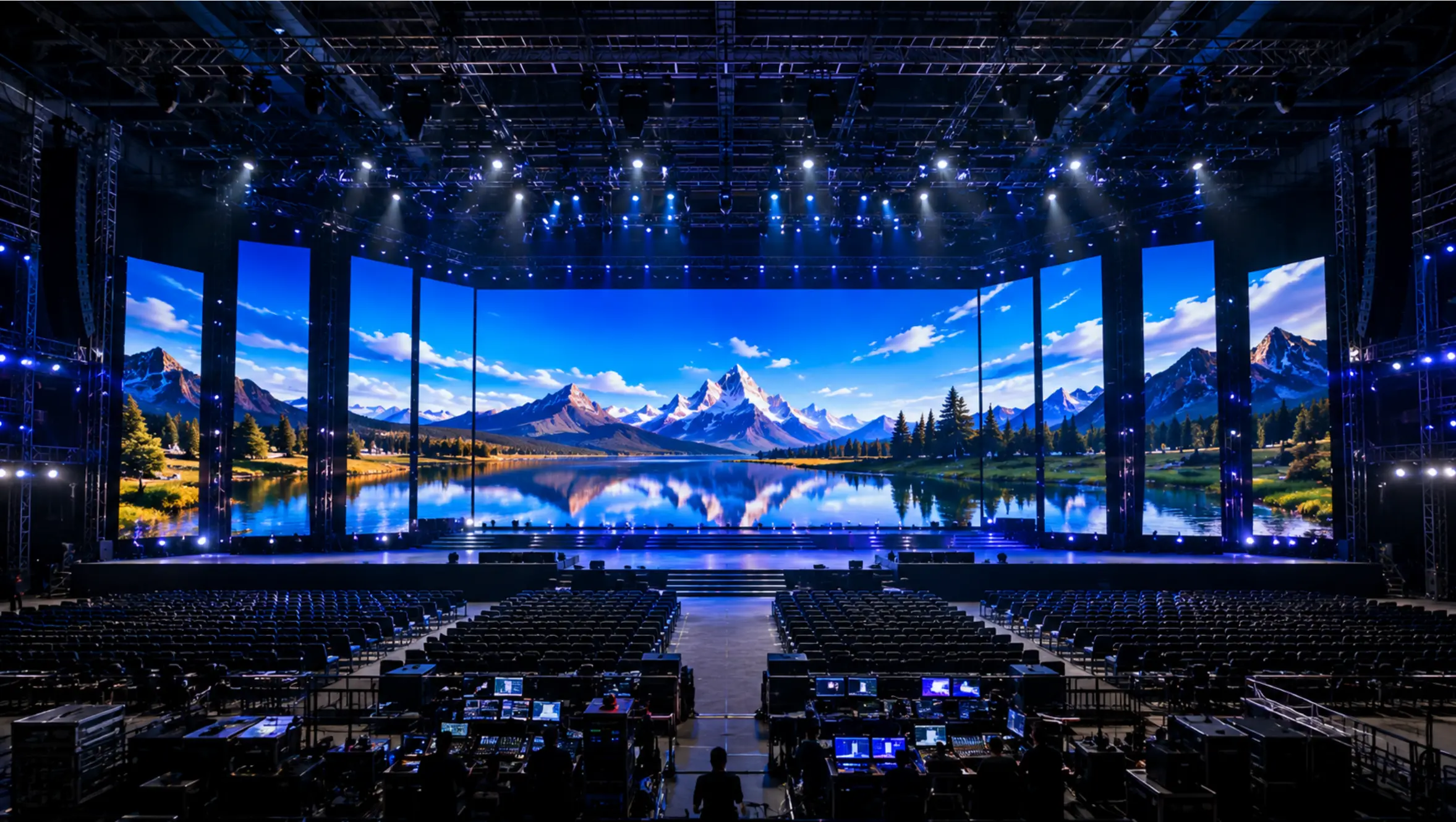
Why LED Displays Have Become the Mainstream Visual Solution
Ten years ago, many commercial projects still relied on:
- LCD video walls
- Projection systems
- Traditional signage
Today, large-format professional projects increasingly prefer LED displays because they solve several real-world problems that older technologies struggle with.
예를 들어:
- LCD walls have visible bezels
- Projectors are heavily affected by ambient light
- Traditional signage lacks dynamic content capability
LED displays, on the other hand, provide:
- Seamless visuals
- Extremely high brightness
- Flexible screen sizes
- Better durability
- Easier scalability
- More immersive visual impact
이는 특히 다음 분야에서 중요합니다:
- XR 가상 제작
- 소매 플래그십 매장
- Sports venues
- 방송 스튜디오
- Outdoor advertising
- Luxury commercial environments

What Actually Makes Up an LED Display System?
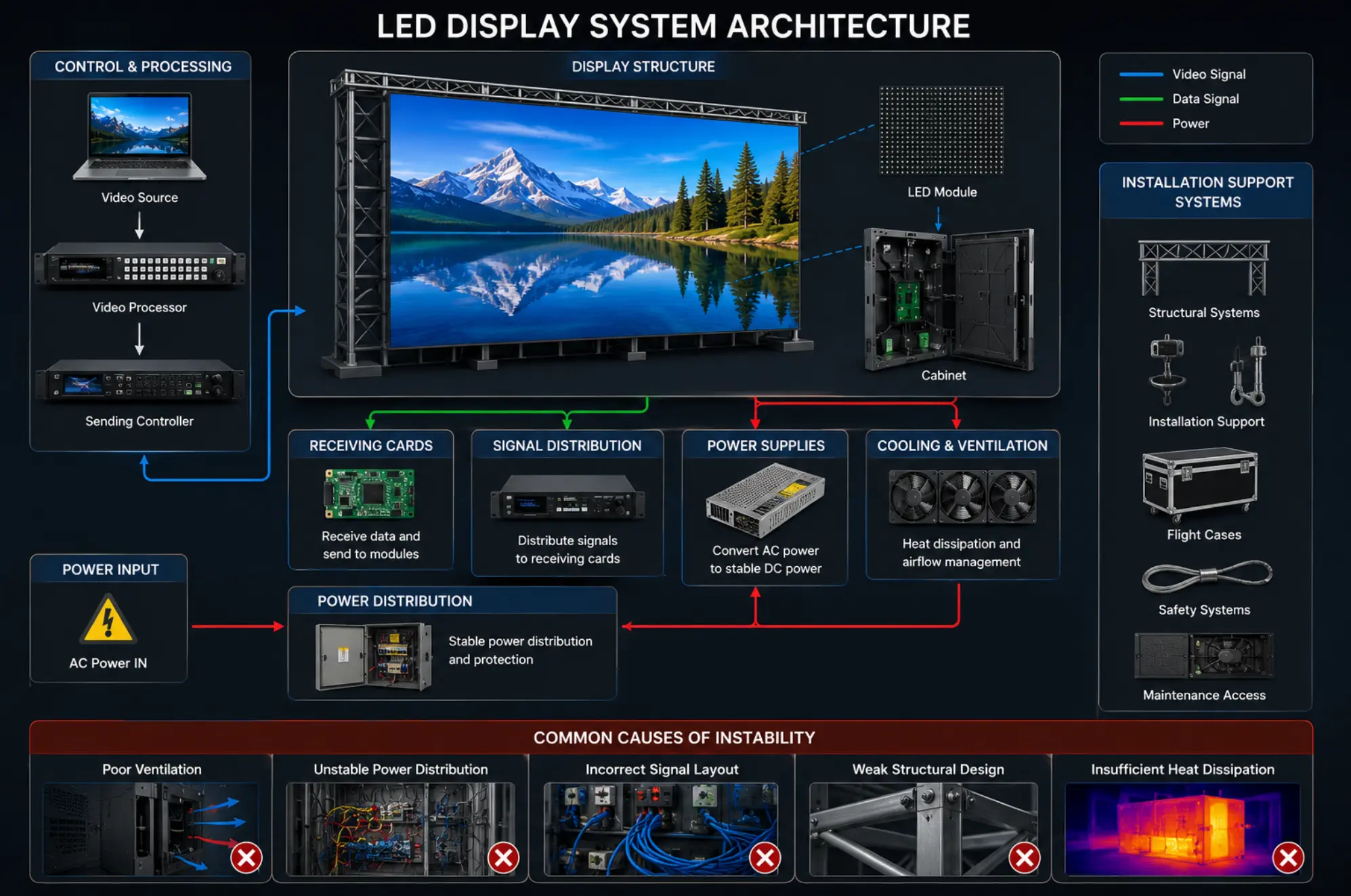
A complete LED display system usually includes much more than just the visible screen surface.
In most professional projects, the system includes:
- LED modules
- Cabinets
- Power supplies
- Receiving cards
- Sending controllers
- Video processors
- Structural systems
- Signal distribution
- Cooling and ventilation systems
- Installation support systems
Many stability problems in LED projects are not caused by the LED modules themselves, but by:
- poor ventilation
- unstable power distribution
- incorrect signal layout
- weak structural design
- insufficient heat dissipation
This is why professional engineering experience matters.
Different Industries Use LED Displays Very Differently
Although the hardware may look similar, the requirements for different industries are completely different.
예를 들어:
애플리케이션 | Real Project Focus |
XR 가상 제작 | High refresh rate + camera compatibility |
Retail Flagship Store | Color consistency + luxury appearance |
교회 LED 벽면 | Viewing comfort + stability |
스포츠 경기장 | High brightness + protection level |
회의실 | Fine pixel pitch + front maintenance |
야외 광고판 | Heat resistance + waterproof reliability |
전시 부스 | Fast installation + lightweight structure |
This is also why experienced LED suppliers usually ask detailed questions before recommending products.
Why High-End Buyers Focus More on System Reliability
In many overseas projects, buyers are no longer only comparing price.
Professional integrators and distributors now pay much more attention to:
- Long-term stability
- Easy maintenance
- Spare part standardization
- Installation efficiency
- Power consumption
- Signal compatibility
- Certification standards
- Delivery consistency
For example, in Middle East outdoor projects, heat resistance and power stability are often more important than ultra-fine resolution.
In European retail projects, cabinet flatness and visual consistency usually matter more.
In XR stages, refresh rate and grayscale performance become critical.
These practical engineering differences are often more important than marketing specifications.

DDW 엔지니어 노트
Many first-time LED buyers focus heavily on pixel pitch while ignoring installation environment and maintenance conditions.
In real projects, factors like heat dissipation, signal stability, cabinet precision, and maintenance access often have a much bigger impact on long-term operation.
특히 다음의 경우에 더욱 그러합니다:
- XR 스튜디오
- 방송 환경
- 소매 플래그십 매장
- outdoor commercial projects
- large rental stages
A stable LED system is never only about image quality.