
핵심 이해
Indoor and outdoor LED displays are designed for different environmental conditions and application requirements.
Choosing the correct type is essential for performance and reliability.

Indoor LED Displays
Indoor displays focus on:
- 고해상도
- Fine pixel pitch
- Better color accuracy
- Close viewing distance
600–1200 니트
적용 분야:
- 회의실
- Corporate boardrooms
- 소매 플래그십 매장
- Luxury brand showrooms
- Exhibition halls
- Museums
- XR virtual production studios
- Film production environments
- 방송 스튜디오
실외용 LED 디스플레이
실외 디스플레이의 우선순위는 다음과 같습니다:
- High brightness
- Waterproof protection
- Heat resistance
- 원거리 가시거리
Typical brightness:
4500–10000 nits
적용 분야:
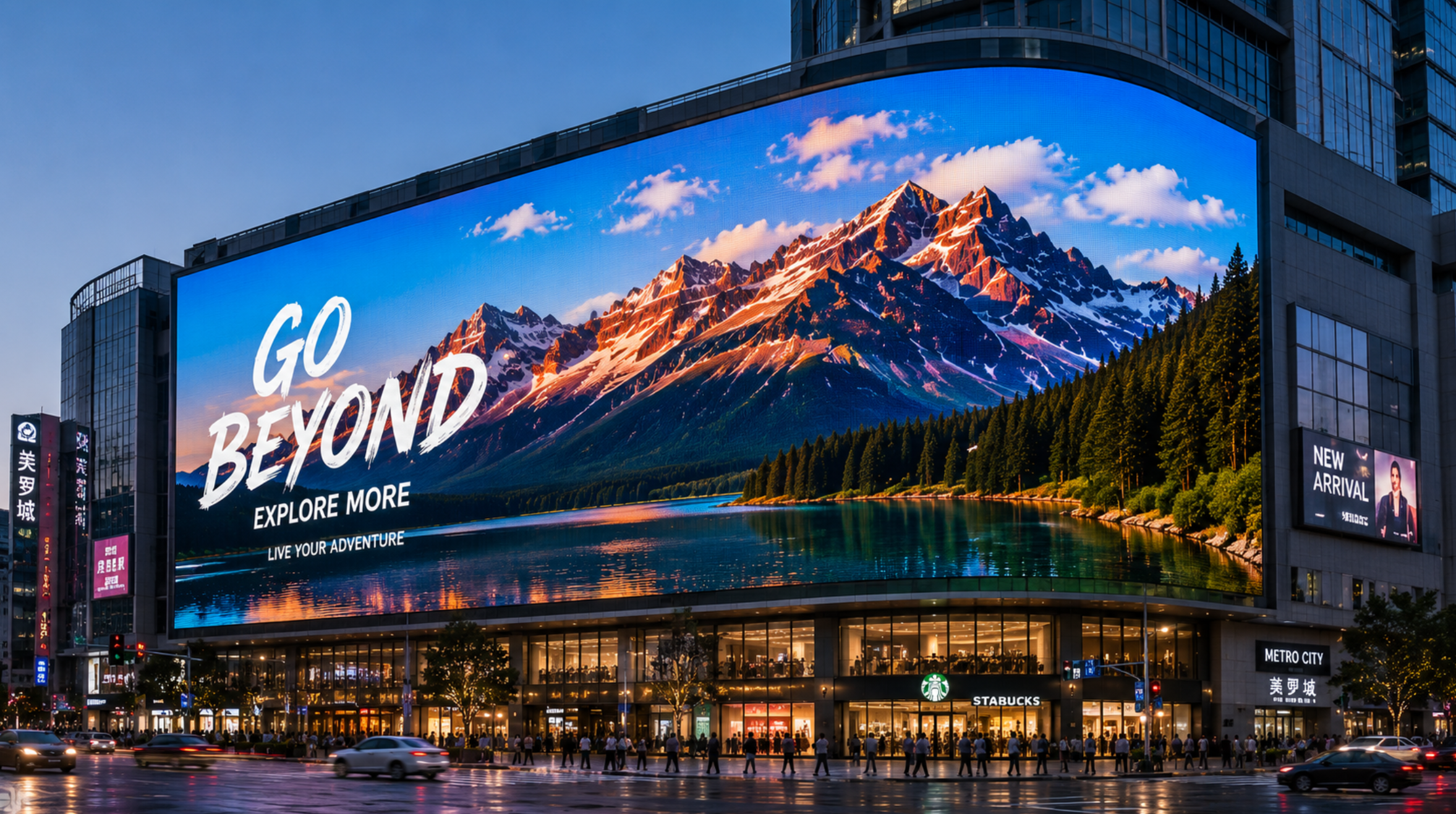
- Outdoor billboards
- DOOH media networks
- Sports stadiums
- Highway advertising
- Building media facades
- Commercial plazas
- Smart city projects
- Transportation hubs
- Large public venues
Main Differences
주요 기능 | 실내 | 야외 |
밝기 | Lower | Higher |
Waterproof | No | Yes |
픽셀 피치 | Smaller | Larger |
시청 거리 | Close | Far |
보호 등급 | IP20 | IP65 |
How Engineers Usually Select the Right Screen
Choose Indoor LED Display If
- Installation is inside buildings
- Audience is close to screen
- High-definition visuals are required
Choose Outdoor LED Display If
- Installation faces sunlight or rain
- Long viewing distance is needed
- High brightness is required
DDW 기술 인사이트
Indoor and outdoor LED displays serve very different environments. Proper selection ensures better visual performance, durability, and project success.