
Quick answer: LED display brightness is measured in nits (cd/m²). Indoor LED screens usually need 600–1,500 nits, semi-outdoor 2,500–4,000 nits, and outdoor LED displays in direct sunlight 5,000–8,000 nits or more.
핵심 이해
밝기는 다양한 조명 조건에서 LED 디스플레이가 얼마나 잘 보이는지를 결정합니다.
이는 다음을 위한 가장 중요한 사양 중 하나입니다. indoor and outdoor LED display applications.
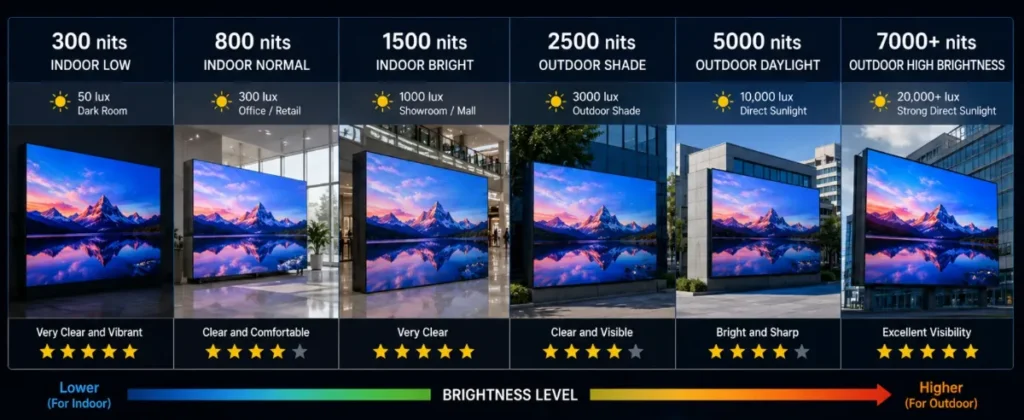
밝기란 무엇인가?
밝기는 다음 단위로 측정됩니다:
니트 (cd/m²)
밝기가 높을수록 가시성이 더 좋아집니다.
일반적인 밝기 수준
애플리케이션 | 밝기 |
실내 컨퍼런스 | 600–1000 니트 |
소매용 디스플레이 | 800–1500 니트 |
옥외 광고 | 5,000–10,000 니트 |
경기장 전광판 | 6,500–10,000 니트 |
대부분의 고객이 간과하는 밝기 문제
실내 용도
밝기가 너무 높으면 눈의 피로를 유발할 수 있습니다.
실외 용도
디스플레이는 직사광선이 닿는 곳에서도 선명하게 보여야 합니다.
자동 밝기 조절
최신 LED 시스템은 주변 조도에 따라 밝기를 자동으로 조절하는 기능을 지원합니다.
장점:
- 에너지 절약
- 더 나은 시각적 편안함
- 더 긴 수명
DDW Technical Insight: LED Display Brightness
적절한 밝기 수준을 선택하면 화질, 에너지 효율 및 디스플레이의 장기적인 성능이 향상됩니다.
FAQ
How many nits does an outdoor LED display need?
Outdoor LED displays generally need 5,000–8,000 nits to stay readable in direct sunlight; shaded or north-facing sites can use about 4,000–5,000 nits.
Can an indoor LED screen be too bright?
Yes. Indoor LED screens above about 1,500 nits cause glare and eye fatigue, so they are normally dimmed to 400–800 nits in use.
What is automatic brightness adjustment?
A light sensor measures ambient light and the control system raises or lowers LED display brightness automatically, saving energy and extending LED life.
Related LED Display Guides
- Indoor vs outdoor LED display
- LED screen IP rating
- LED display screen structure
- LED screen refresh rate
- LED display pixel pitch explained
- Energy-saving LED display technology
Recommended DDW products: FC Series energy-saving outdoor LED screen · HK Series HD indoor LED screen