
Quick answer: LED display brightness is measured in nits (cd/m²). Indoor LED screens usually need 600–1,500 nits, semi-outdoor 2,500–4,000 nits, and outdoor LED displays in direct sunlight 5,000–8,000 nits or more.
درک اصلی
درخشندگی تعیین میکند که نمایشگر LED در شرایط نوری مختلف تا چه حد قابل مشاهده باقی میماند.
این یکی از حیاتیترین مشخصات برای است. indoor and outdoor LED display applications.
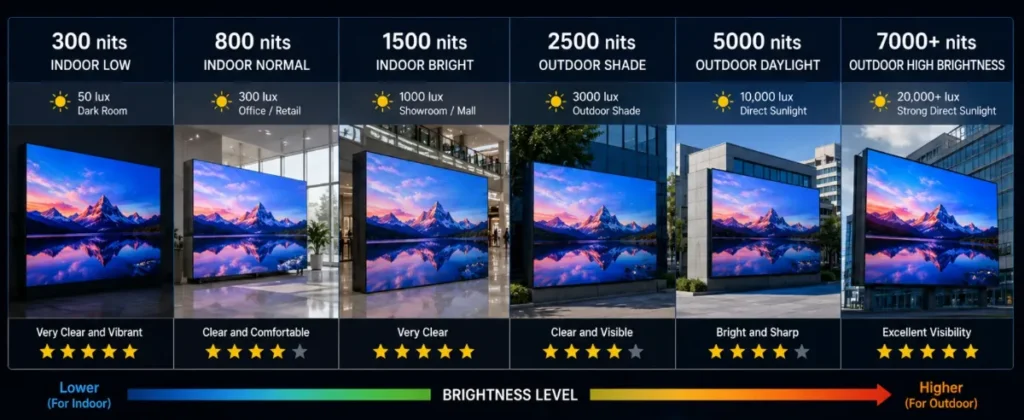
درخشندگی چیست؟
درخشندگی در: اندازهگیری میشود
نیتس (سیدی/متر مربع)
درخشندگی بالاتر به معنای دید بهتر است.
سطوح معمول روشنایی
کاربرد | درخشندگی |
کنفرانس داخلی | ۶۰۰–۱۰۰۰ نیت |
نمایشگاه خردهفروشی | ۸۰۰–۱۵۰۰ نیت |
تبلیغات محیطی | ۵۰۰۰–۱۰۰۰۰ نیت |
نمایش استادیوم | ۶۵۰۰–۱۰۰۰۰ نیت |
مشکلات روشنایی که اکثر مشتریان نادیده میگیرند
کاربردهای داخلی
نور بیش از حد ممکن است باعث خستگی چشم شود.
کاربردهای فضای باز
صفحهها باید در معرض نور مستقیم خورشید قابل مشاهده باقی بمانند.
تنظیم خودکار روشنایی
سیستمهای مدرن LED از کنترل خودکار روشنایی بر اساس نور محیط پشتیبانی میکنند.
مزایا:
- صرفهجویی در انرژی
- راحتی بصری بهتر
- طول عمر طولانیتر
DDW Technical Insight: LED Display Brightness
انتخاب سطح روشنایی مناسب، کیفیت مشاهده، بهرهوری انرژی و عملکرد بلندمدت نمایشگر را بهبود میبخشد.
FAQ
How many nits does an outdoor LED display need?
Outdoor LED displays generally need 5,000–8,000 nits to stay readable in direct sunlight; shaded or north-facing sites can use about 4,000–5,000 nits.
Can an indoor LED screen be too bright?
Yes. Indoor LED screens above about 1,500 nits cause glare and eye fatigue, so they are normally dimmed to 400–800 nits in use.
What is automatic brightness adjustment?
A light sensor measures ambient light and the control system raises or lowers LED display brightness automatically, saving energy and extending LED life.
Related LED Display Guides
- Indoor vs outdoor LED display
- LED screen IP rating
- LED display screen structure
- LED screen refresh rate
- LED display pixel pitch explained
- Energy-saving LED display technology
Recommended DDW products: FC Series energy-saving outdoor LED screen · HK Series HD indoor LED screen