
Quick answer: An LED display screen works by grouping red, green and blue LEDs into pixels. A sending card converts the video signal into data, receiving cards distribute it to LED modules, and driver ICs switch each LED on and off thousands of times per second (PWM) to create the image and colors.
درک اصلی
صفحهنمایشهای LED با کنترل میلیونها LED کوچک برای ایجاد تصاویر و ویدیوهای پویا بهصورت بلادرنگ کار میکنند.
هر پیکسل LED سطوح متفاوتی از نور قرمز، سبز و آبی را منتشر میکند تا تصاویر تمامرنگی ایجاد کند.
اصل کارکردی اساسی
فرآیند عموماً شامل موارد زیر است:
- ورودی سیگنال ویدئویی
- پردازش سیگنال
- انتقال داده
- رمزگشایی کارت دریافت
- نمایشگر ماژول LED
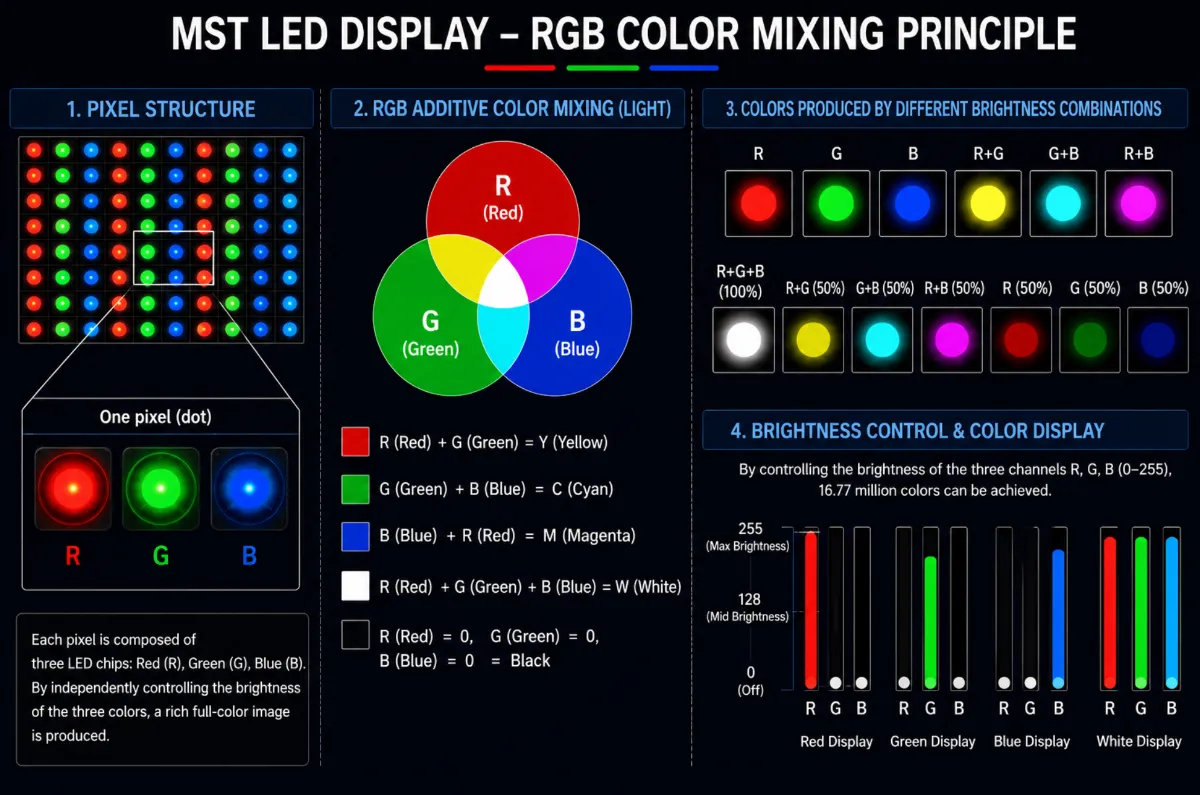
مخلوطسازی رنگ RGB
هر پیکسل شامل:
- LED قرمز
- LED سبز
- LED آبی
با تنظیم سطوح روشنایی LEDهای RGB، نمایشگر میتواند میلیونها رنگ را بازتولید کند.
فرآیند تازهسازی تصویر
صفحهنمایشهای LED بهطور مداوم فریمهای تصویر را با سرعت بالا تازهسازی میکنند.
نرخهای تازهسازی بالا فراهم میکنند:
- حرکت نرم
- تصاویر بدون چشمک
- Better camera performance (higher LED screen refresh rate)
نرخهای تازهسازی معمول:
- ۱۹۲۰ هرتز
- ۳۸۴۰ هرتز
- ۷۶۸۰ هرتز
انتقال سیگنال
مسیر سیگنال:
کامپیوتر ← پردازنده ویدئو ← کارت ارسال ← کارت دریافت ← ماژول LED
همگامسازی در مقابل سیستمهای غیرهمگام
سامانه همگامسازی
انتقال سیگنال در زمان واقعی.
کاربرد:
- رویدادهای زنده
- مراحل ایکسآر
- پخش
سیستم ناهمزمان
محتوا بهصورت محلی ذخیره شده است.
کاربرد:
- صفحههای تبلیغاتی
- تابلوهای نمایش دیجیتال
Example: How a Stage LED Screen Is Controlled
A typical 6 × 3.5 m rental LED screen for a concert shows how the system works in practice:
- Source: a media server or laptop outputs a 1920×1080, 60 Hz video signal via HDMI or SDI.
- Video processor: scales the image to the LED screen resolution (for example 2304×1344 at P2.6) and adjusts brightness and color.
- Sending card: converts the video into LED data and sends it over Cat6 or fiber, each port driving up to about 650,000 pixels.
- Receiving cards: one per cabinet, each takes its share of the image and passes it to the LED modules.
- Driver ICs: on each module switch the red, green and blue LEDs at a refresh rate of 3,840 Hz or higher so the screen looks flicker-free on camera.
Because data is transmitted in a daisy chain with backup loops, a single cable failure will not black out the LED display.
DDW Technical Insight: How LED Display Screens Work
صفحهنمایشهای LED با ترکیب الکترونیک پیشرفته، پردازش تصویر و سیستمهای کنترل دیجیتال، جلوههای بصری یکپارچه و بزرگمقیاس را در کاربردهای حرفهای بیشمار ارائه میدهند.
FAQ
How does an LED screen display colors?
Each pixel mixes red, green and blue LEDs at different brightness levels. Combining them produces millions (or billions) of colors.
What is the difference between synchronous and asynchronous LED displays?
A synchronous LED display shows content in real time from a computer; an asynchronous one stores content on a player card and plays it independently.
What controls an LED display?
A control system of sending card (or video processor), receiving cards and software such as NovaStar or Colorlight drives the LED display screen.
Related LED Display Guides
- What is an LED display
- LED display screen structure
- LED screen refresh rate
- SMD vs DIP LED screen
- LED display pixel pitch explained
Recommended DDW products: HK Series HD indoor LED screen · اجاره نمایشگر LED سری A