
درک اصلی
A professional LED display system consists of multiple hardware and electronic components working together to deliver stable visual performance.
Understanding the structure of an LED display helps users better select, maintain, and operate LED systems.

Main Components of an LED Display
LED Module
The LED module is the core display unit containing LED lamps, PCB boards, driver ICs, and connectors.
Modules are assembled together to form the full screen.

Cabinet
Cabinets provide structural support and integrate modules, power supplies, and receiving cards.
Common cabinet materials include:
- فولاد
- آلومینیوم
- ریختهگری تحت فشار آلومینیوم
- Magnesium alloy
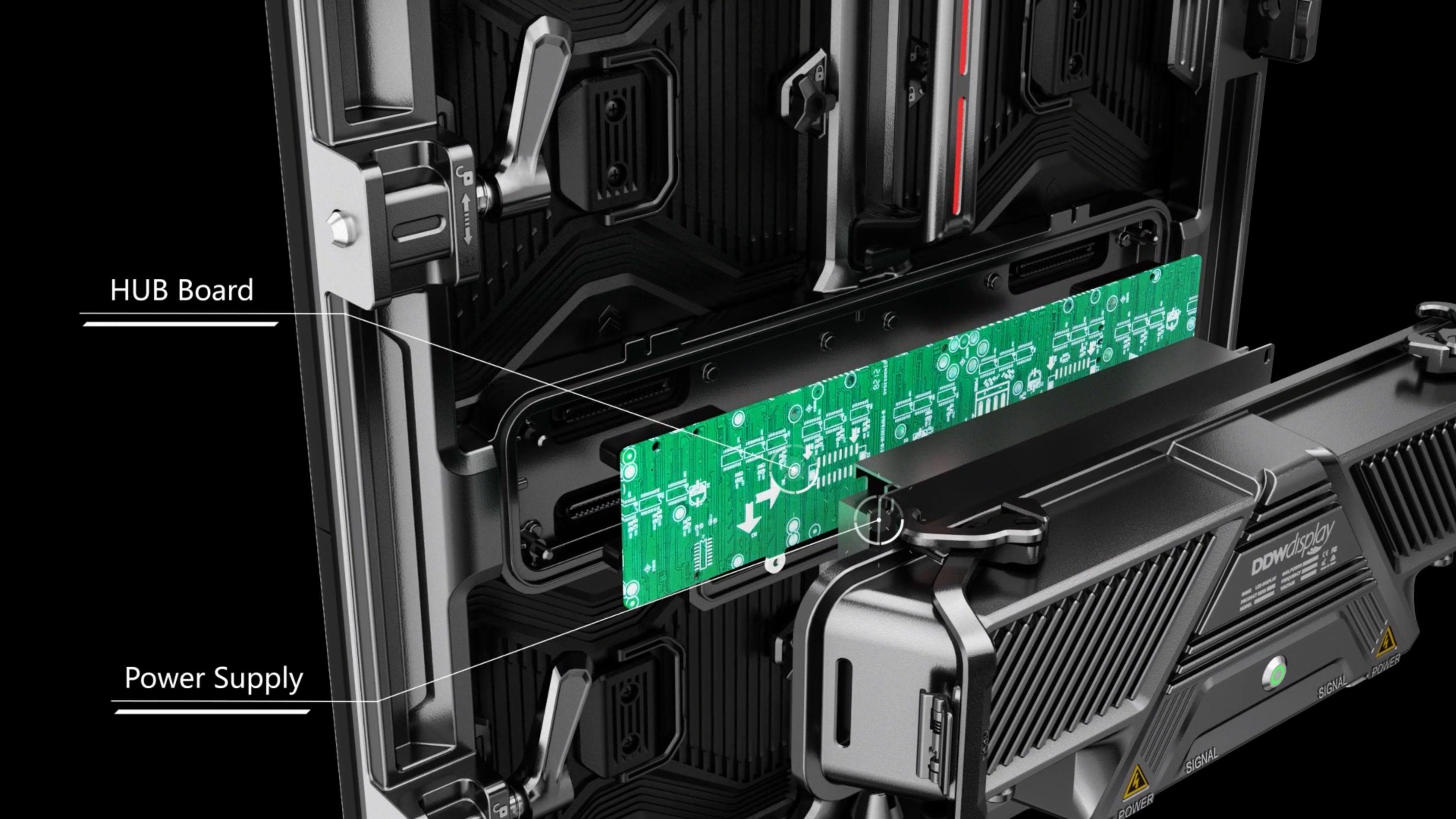
Power Supply
The power supply converts AC electricity into stable DC power for LED modules.
High-quality power supplies improve:
- Stability
- Lifespan
- Energy efficiency
کارت دریافت
Receiving cards process image data from the control system and distribute signals to modules.
They are essential for:
- Color accuracy
- Signal stability
- Image synchronization
Sending Controller
The sending controller transmits video data from the processor or computer to the receiving cards.
Video Processor
Video processors handle:
- Signal scaling
- Multi-input switching
- HDR processing
- Image optimization

Supporting Systems
Additional components include:
- Signal cables
- Power cables
- سیستمهای سازهای
- Cooling systems
- Backup systems
- Flight cases
Front Service vs Rear Service Structure
Front Service
Maintenance can be performed from the front side.
مناسب برای:
- Wall-mounted installations
- Limited rear access environments
Rear Service
Maintenance is performed from the rear side.
مناسب برای:
- Large outdoor structures
- Traditional fixed installations

دیدگاه فنی DDW
A high-quality LED display is not only about image quality but also about system structure, reliability, and engineering design.
Professional structural design ensures long-term stable operation and easier maintenance.