
Quick answer: An LED display screen is built from LED modules (the light-emitting units), mounted in cabinets, powered by switching power supplies and driven by a control system (sending card and receiving cards) — plus the steel structure, cables and video processor that complete the system.
الفهم الأساسي
A professional LED display system consists of multiple hardware and electronic components working together to deliver stable visual performance.
Understanding the structure of an LED display helps users better select, maintain, and operate LED systems.
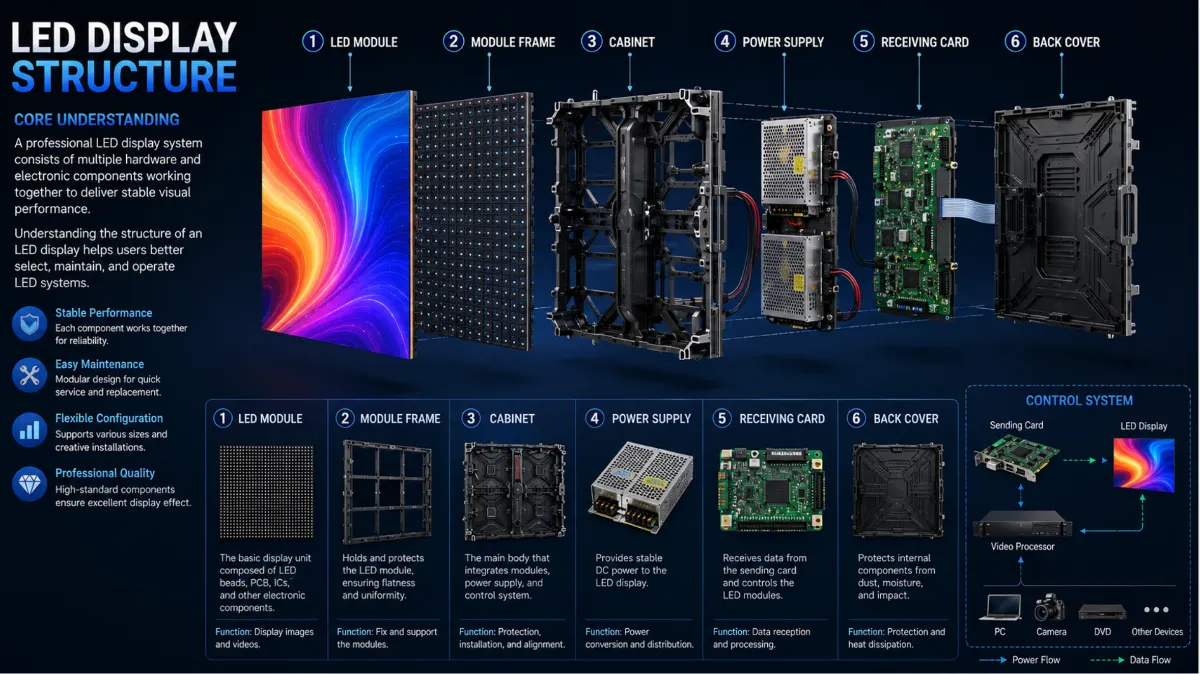
Main Components of an LED Display
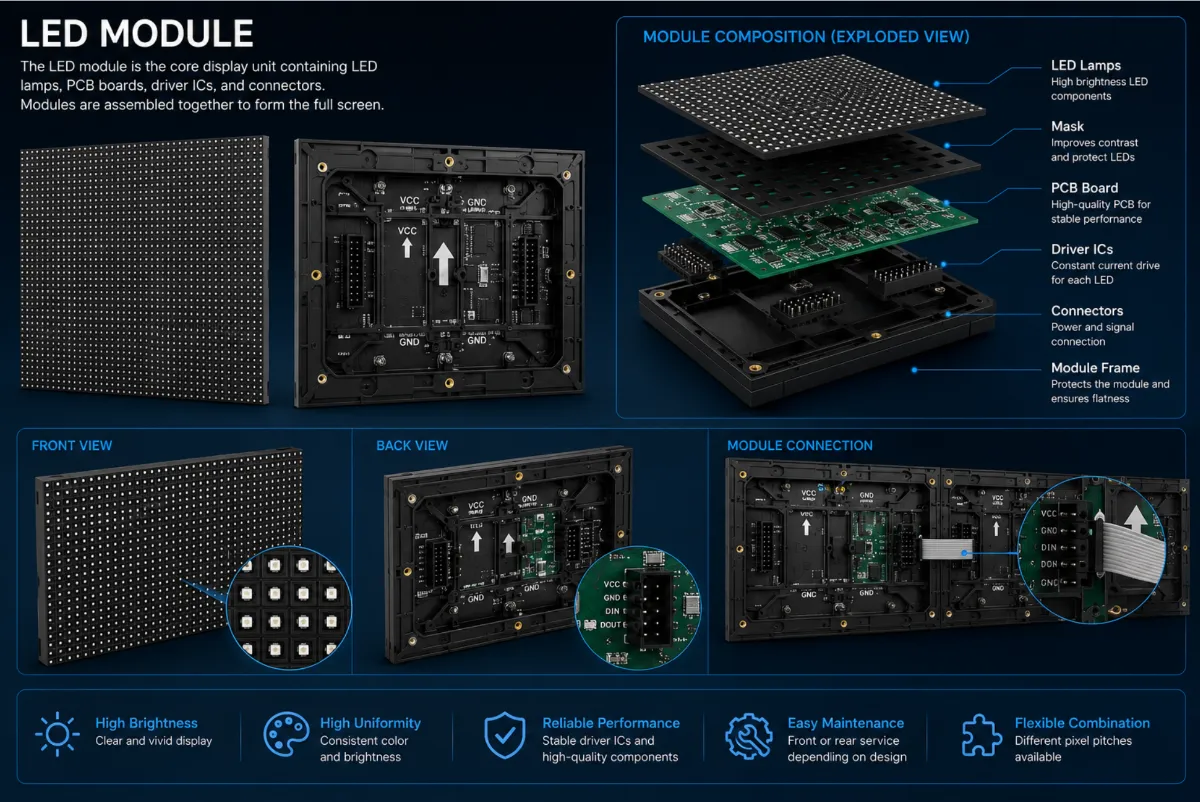
LED Module
The LED module is the core display unit containing LED lamps, PCB boards, driver ICs, and connectors.
Modules are assembled together to form the full screen.
Cabinet
Cabinets provide structural support and integrate modules, power supplies, and receiving cards.
Common LED screen cabinet materials include:
- الصلب
- الألومنيوم
- صب الألمنيوم بالقالب
- Magnesium alloy
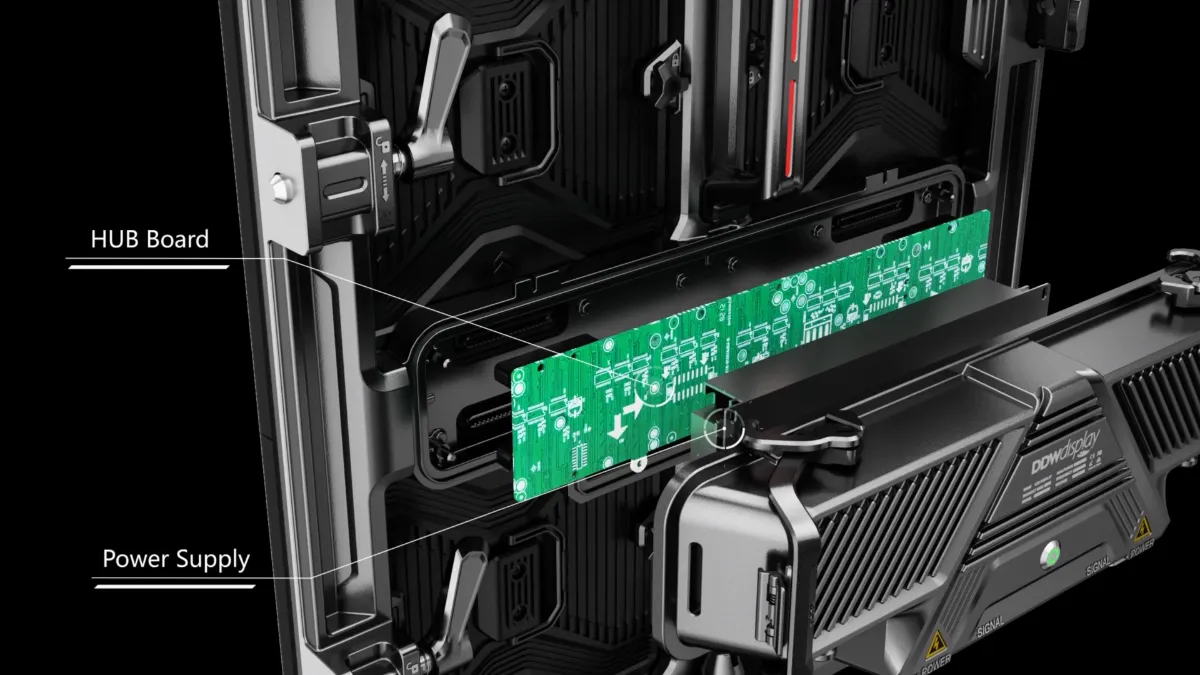
Power Supply
The power supply converts AC electricity into stable DC power for LED modules.
High-quality power supplies improve:
- Stability
- Lifespan
- Energy efficiency
بطاقة الاستلام
Receiving cards process image data from the control system and distribute signals to modules.
They are essential for:
- Color accuracy
- Signal stability
- Image synchronization
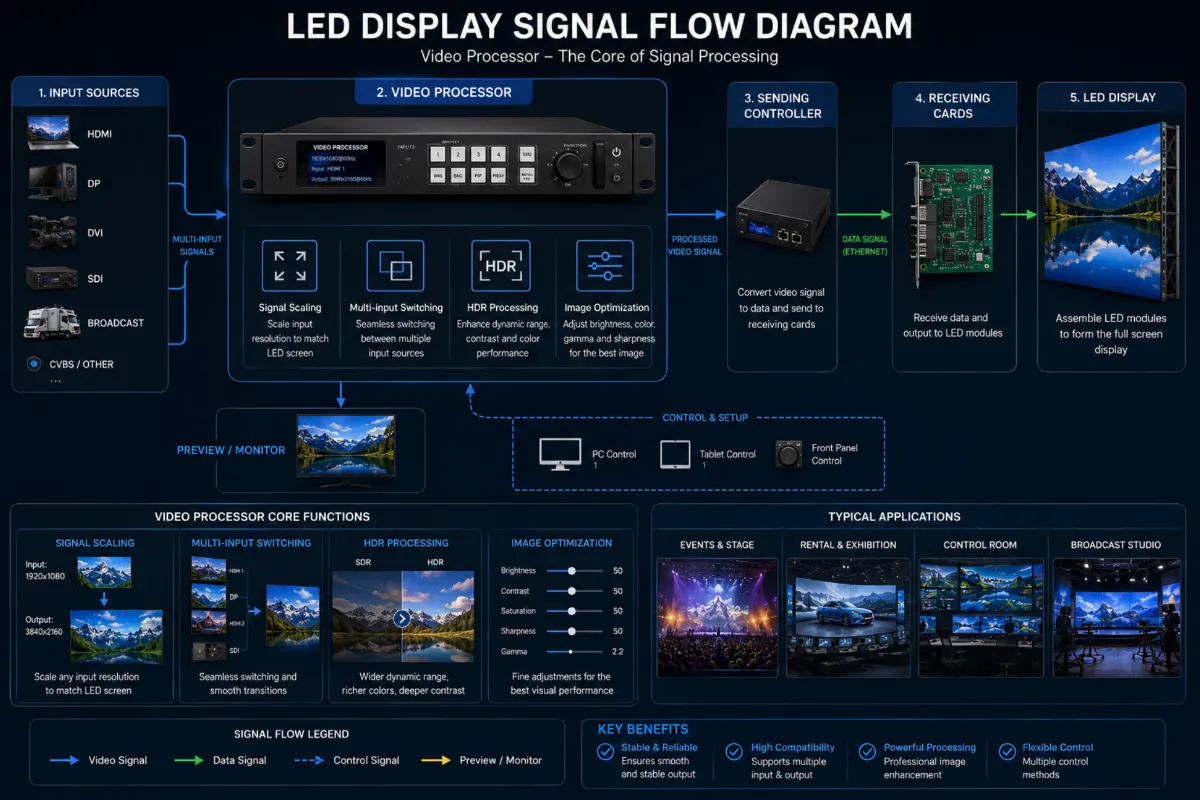
Sending Controller
The sending controller transmits video data from the processor or computer to the receiving cards.
معالج الفيديو
Video processors handle:
- Signal scaling
- Multi-input switching
- معالجة HDR
- Image optimization
Supporting Systems
Additional components include:
- Signal cables
- Power cables
- الأنظمة الإنشائية
- Cooling systems
- Backup systems
- Flight cases
Front Service vs Rear Service Structure
الخدمة الأمامية
Maintenance can be performed from the front side.
مناسب لـ:
- التركيبات المثبتة على الحائط
- Limited rear access environments
الصيانة الخلفية
Maintenance is performed from the rear side.
مناسب لـ:
- Large outdoor structures
- Traditional fixed installations
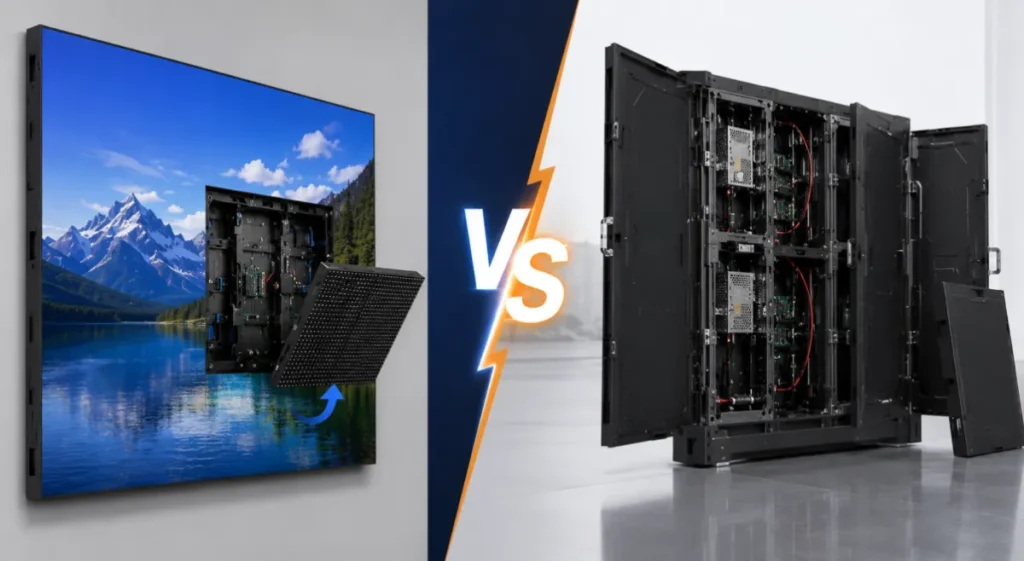
DDW Technical Insight: LED Display Screen Structure
A high-quality LED display is not only about image quality but also about system structure, reliability, and engineering design.
Professional structural design ensures long-term stable operation and easier maintenance.
FAQ
What are the main parts of an LED display?
The main parts are LED modules, cabinets, power supplies, receiving cards, a sending card or video processor, cables and the mounting structure.
What is the difference between an LED module and an LED cabinet?
An LED module is the small light-emitting board; an LED cabinet is the frame that holds several modules, power supplies and receiving cards.
How long does an LED display screen last?
A quality LED display screen typically lasts 80,000–100,000 hours to half brightness, with power supplies and modules replaceable during its life.
Related LED Display Guides
- What is an LED display
- How LED display screens work
- Front service vs rear service LED display
- LED screen cabinet materials
- LED display pixel pitch explained
- LED screen lifespan
Recommended DDW products: شاشة LED من سلسلة A متاحة للتأجير · FU Series indoor LED display