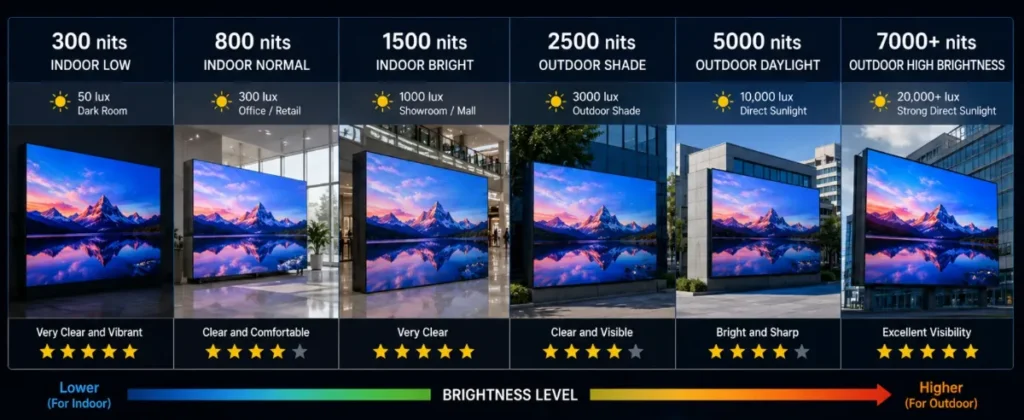
Quick answer: LED display brightness is measured in nits (cd/m²). Indoor LED screens usually need 600–1,500 nits, semi-outdoor 2,500–4,000 nits, and outdoor LED displays in direct sunlight 5,000–8,000 nits or more.
الفهم الأساسي
يحدد السطوع مدى وضوح شاشة LED في ظل ظروف الإضاءة المختلفة.
إنها واحدة من أهم المواصفات لـ indoor and outdoor LED display applications.
ما هو السطوع؟
يُقاس السطوع بوحدة:
نيت (سي دي/م²)
كلما زاد السطوع، زادت الرؤية.
مستويات السطوع النموذجية
التطبيق | السطوع |
مؤتمر داخلي | 600–1000 نيت |
عرض المنتجات في متاجر البيع بالتجزئة | 800–1500 نيت |
الإعلانات الخارجية | 5000–10000 نيت |
شاشة الاستاد | 6500–10000 نيت |
مشاكل السطوع التي يتجاهلها معظم العملاء
التطبيقات الداخلية
قد يؤدي الإفراط في السطوع إلى إجهاد العين.
التطبيقات الخارجية
يجب أن تظل الشاشات مرئية تحت أشعة الشمس المباشرة.
الضبط التلقائي للسطوع
تدعم أنظمة LED الحديثة التحكم التلقائي في السطوع بناءً على الإضاءة المحيطة.
المزايا:
- توفير الطاقة
- راحة بصرية أفضل
- عمر افتراضي أطول
DDW Technical Insight: LED Display Brightness
يؤدي اختيار مستوى السطوع المناسب إلى تحسين جودة العرض وكفاءة استهلاك الطاقة وأداء الشاشة على المدى الطويل.
FAQ
How many nits does an outdoor LED display need?
Outdoor LED displays generally need 5,000–8,000 nits to stay readable in direct sunlight; shaded or north-facing sites can use about 4,000–5,000 nits.
Can an indoor LED screen be too bright?
Yes. Indoor LED screens above about 1,500 nits cause glare and eye fatigue, so they are normally dimmed to 400–800 nits in use.
What is automatic brightness adjustment?
A light sensor measures ambient light and the control system raises or lowers LED display brightness automatically, saving energy and extending LED life.
Related LED Display Guides
- Indoor vs outdoor LED display
- LED screen IP rating
- LED display screen structure
- LED screen refresh rate
- LED display pixel pitch explained
- Energy-saving LED display technology
Recommended DDW products: FC Series energy-saving outdoor LED screen · HK Series HD indoor LED screen