
Quick answer: Indoor LED displays use finer pixel pitch (about P0.9–P4), 600–1,500 nits brightness and IP20–IP30 protection, while outdoor LED displays use larger pitch (about P3–P10+), 5,000+ nits and IP65 waterproofing.
Core Understanding
Indoor and outdoor LED displays are designed for different environmental conditions and application requirements.
Choosing the correct type is essential for performance and reliability.
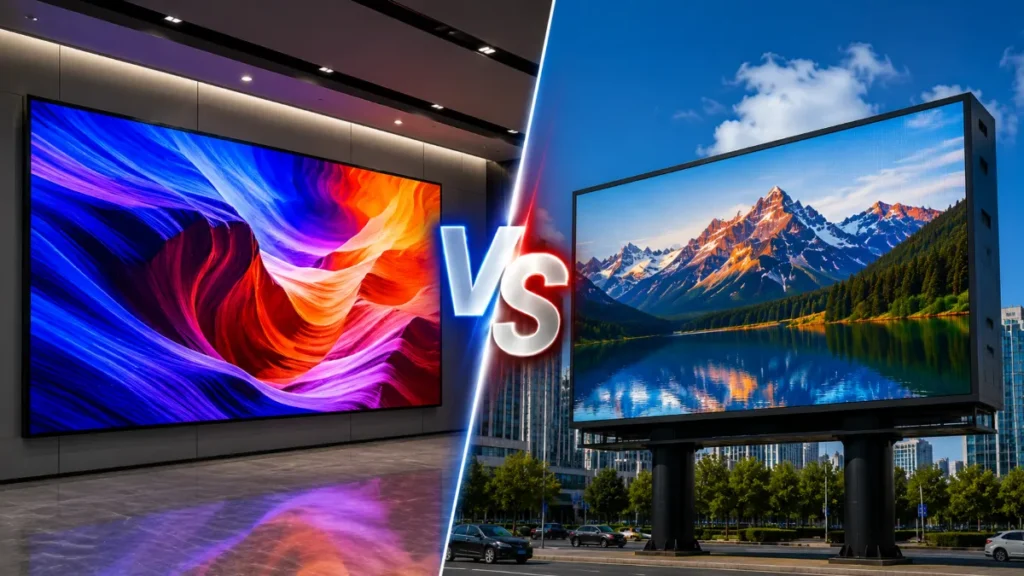
Indoor LED Displays
Indoor displays focus on:
- High resolution
- Fine pixel pitch
- Better color accuracy
- Close viewing distance
Typical LED display brightness:
600–1200 nits
Applications:
- Conference rooms
- Corporate boardrooms
- Retail flagship stores
- Luxury brand showrooms
- Exhibition halls
- Museums
- XR virtual production studios
- Film production environments
- Broadcast studios
Outdoor LED Displays
Outdoor displays prioritize:
- High brightness
- Waterproof protection
- Heat resistance
- Long-distance visibility
Typical brightness:
4500–10000 nits
Applications:
- Outdoor billboards
- DOOH media networks
- Sports stadiums
- Highway advertising
- Building media facades
- Commercial plazas
- Smart city projects
- Transportation hubs
- Large public venues
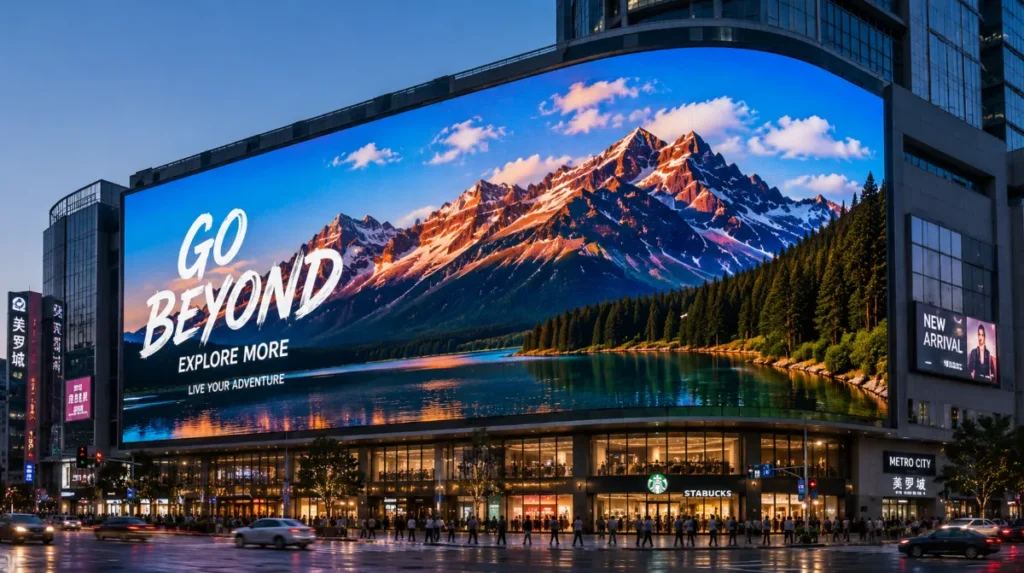
Main Differences
Feature | Indoor | Outdoor |
Brightness | Lower | Higher |
Waterproof | No | Yes |
Pixel Pitch | Smaller | Larger |
Viewing Distance | Close | Far |
Protection Level | IP20 | IP65 |
How Engineers Usually Select the Right Screen
Choose Indoor LED Display If
- Installation is inside buildings
- Audience is close to screen
- High-definition visuals are required
Choose Outdoor LED Display If
- Installation faces sunlight or rain
- Long viewing distance is needed
- High brightness is required
DDW Technical Insight: Indoor vs Outdoor LED Displays
Indoor and outdoor LED displays serve very different environments. Proper selection ensures better visual performance, durability, and project success.
FAQ
Can an indoor LED display be used outdoors?
No. Indoor LED displays lack waterproofing (IP65) and sunlight-readable brightness, so they fail quickly outdoors.
What pixel pitch is used for outdoor LED screens?
Outdoor LED screens usually use P3–P10. Closer viewing, such as storefronts, uses P3–P4; highway billboards use P8–P10 or larger.
Why do outdoor LED displays cost more?
Outdoor LED displays need higher-brightness LEDs, waterproof cabinets, stronger power supplies and cooling, which increase the cost per square meter.
Related LED Display Guides
- LED display brightness (nits)
- LED screen IP rating
- SMD vs DIP LED screen
- LED screen cabinet materials
- LED display pixel pitch explained
- Indoor vs outdoor LED display buyer comparison
Recommended DDW products: HK Series HD indoor LED screen · FA Series outdoor LED screen