
Quick answer: For buyers, the key differences are cost and specification: outdoor LED displays cost more per m² at the same pitch because they need 5,000+ nits, IP65 protection and stronger power; indoor screens use finer pitch and lower brightness. Semi-outdoor (window-facing) screens sit in between at about 2,000–5,000 nits.
Indoor and outdoor LED systems follow completely different engineering logic.
Many first-time buyers underestimate how different these two environments actually are.
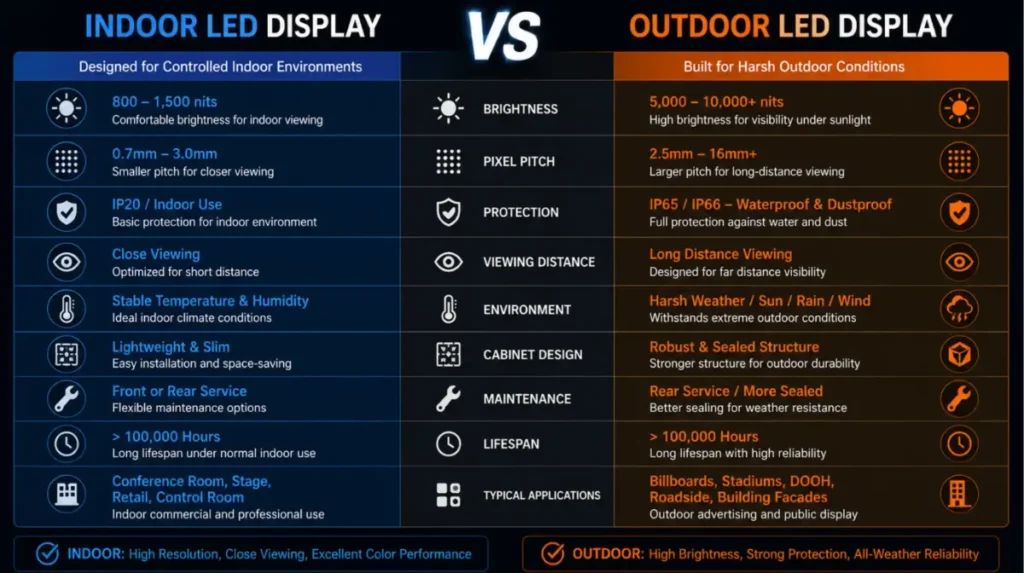
Why Outdoor Projects Are Much More Demanding
Outdoor LED systems must continuously operate under:
- sunlight
- rain
- wind
- humidity
- dust
- high temperature
This is why outdoor projects prioritize:
- waterproofing
- heat dissipation
- structural safety
- high brightness
Why Indoor Projects Focus More on Visual Quality
Indoor environments usually prioritize:
- close-viewing comfort
- fine image detail
- elegant appearance
- low noise operation
This is especially important in:
- conference rooms
- churches
- retail flagship stores
- museums
- XR studios
Why Brightness Standards Are Completely Different
Typical indoor brightness:
- 600–1200 nits
Typical outdoor brightness:
- 5500–10000 nits
Using outdoor brightness indoors may create:
- eye fatigue
- uncomfortable viewing
- excessive glare
DDW Engineer Notes: Indoor vs outdoor LED display buying
Many customers focus mainly on waterproof ratings when evaluating outdoor products.
However, in long-term operation environments, thermal management and ventilation are often much more important than waterproofing itself.
Indoor vs Semi-Outdoor vs Outdoor: What You Pay For
| Spec | Indoor | Semi-outdoor | Outdoor |
|---|---|---|---|
| Brightness | 300–1,500 nits | 2,000–5,000 nits | 5,000–8,000+ nits |
| Protection | IP20–IP30 | IP43–IP54 | IP65 |
| Typical pitch | P0.9–P4 | P2.5–P5 | P3–P10 |
| Power use | Lower | Medium | Higher |
| Cost at same pitch | Lower | Medium | Higher |
FAQ
Is an outdoor LED display more expensive than indoor?
Yes, at the same pixel pitch outdoor screens cost more because of higher brightness, waterproofing and power requirements.
What is a semi-outdoor LED display?
A screen for sheltered or window-facing locations, with 2,000–5,000 nits and moderate protection.
Can I save money using an indoor screen behind a window?
Standard indoor brightness is usually too low in daylight; a semi-outdoor or window-facing LED display is recommended.
Related LED Display Guides
- LED display price per square meter
- Indoor vs outdoor LED displays explained
- LED display price factors
- How to choose an LED display by application
- How to choose LED screen pixel pitch
Recommended DDW products: HK Series HD indoor LED screen · FA Series outdoor LED screen