
Quick answer: XR studios combine an LED back wall and LED floor with camera tracking and real-time rendering to place presenters inside virtual scenes. Typical specs are P1.5–P2.6 walls, P2.6–P3.9 floor panels with high load capacity, 7,680 Hz refresh with genlock and precise color calibration.
LED for XR Studio
XR virtual production has become one of the fastest-growing segments in the global LED industry.
Unlike traditional rental stages, XR studios are essentially film production environments.
That means LED displays are no longer just “background screens”.
They directly affect:
- camera tracking
- virtual environment realism
- lighting interaction
- cinematic image quality
- post-production efficiency
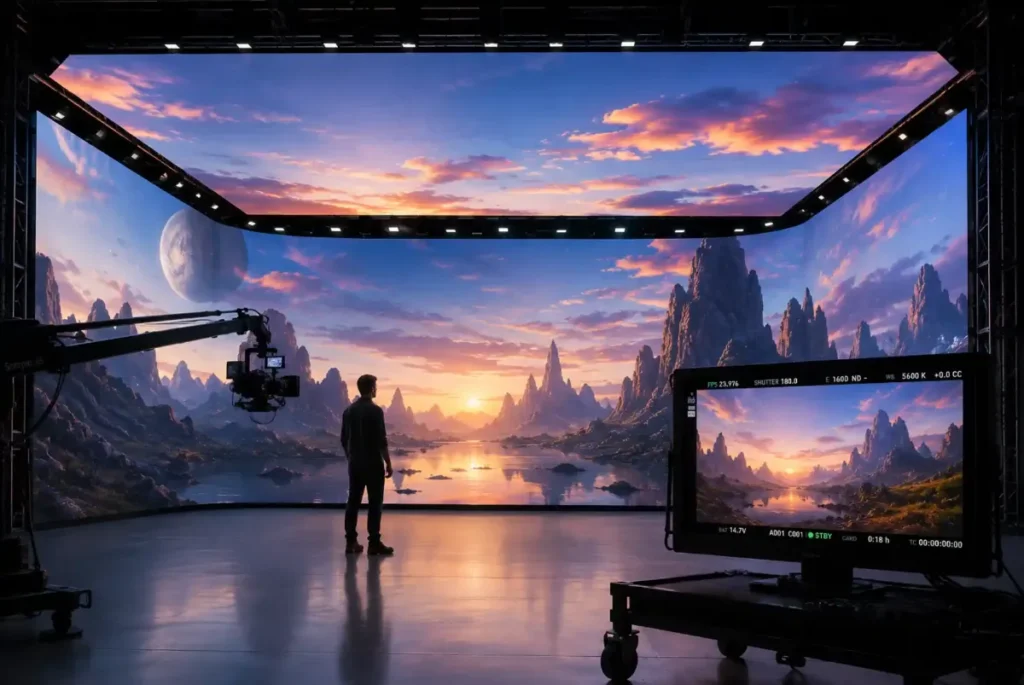
Why XR Projects Require Completely Different LED Standards
Many customers initially assume standard rental LED screens can also be used for XR.
In reality, XR environments place much higher demands on:
- refresh rate
- grayscale performance
- scan mode
- color consistency
- cabinet flatness
- camera synchronization
A screen that looks excellent to the human eye may still produce:
- scan lines
- moiré patterns
- brightness instability
- color shifting
once filmed by cinema cameras.
Why Fine Pixel Pitch Matters in XR
XR cameras often shoot LED walls from extremely close distances.
This is why most XR projects today prefer:
XR Application | Common Pixel Pitch |
Film Production | P1.2–P2.3 |
Broadcast XR | P1.5–P2.6 |
Commercial Studio | P1.8–P2.6 |
Why Refresh Rate Is More Important Than Many Customers Expect
One of the biggest misunderstandings in XR projects is thinking:
“3840Hz is already enough.”
In reality, actual camera performance also depends on:
- driver IC quality
- shutter speed
- grayscale optimization
- camera frame rate
- signal synchronization
This is why many premium XR stages now prefer:
- 7680Hz
- low grayscale optimization
- high-end driver IC solutions
Why Cabinet Flatness Directly Affects Virtual Production
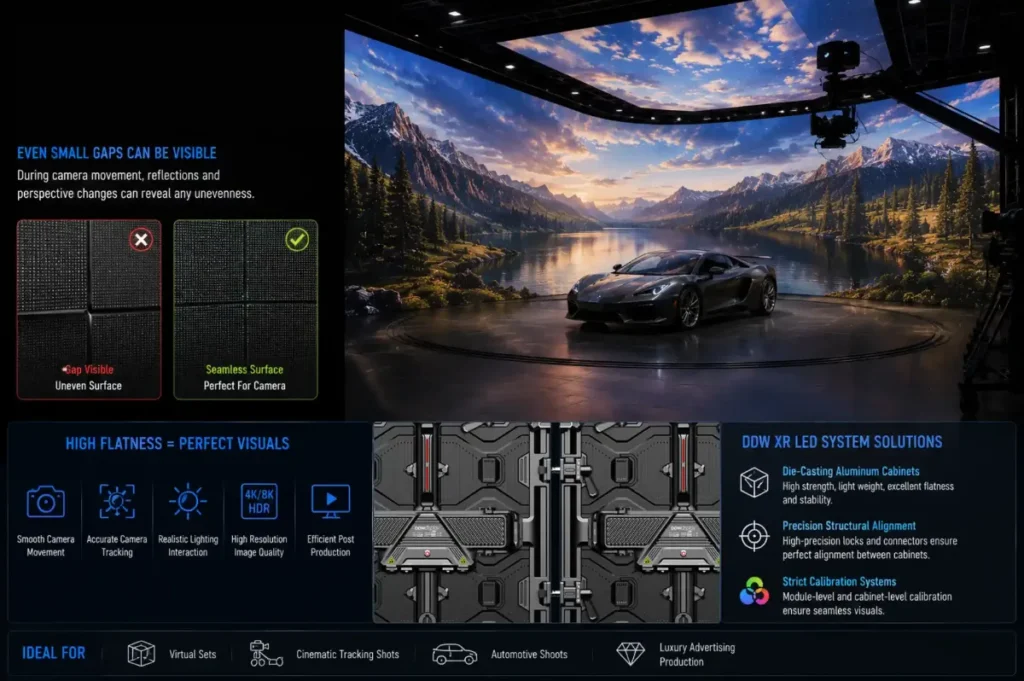
Even small cabinet gaps may become visible during camera movement.
This is especially critical for:
- virtual sets
- cinematic tracking shots
- automotive shoots
- luxury advertising production
This is why XR LED systems usually use:
- die-casting aluminum cabinets
- precision structural alignment
- strict calibration systems
DDW Engineer Notes: XR studio LED walls
Many rental LED products can perform perfectly during concerts but still fail inside XR studios.
XR projects should never be evaluated only by:
- brightness
- refresh rate
- specification sheets
True XR performance depends on the entire visual system working together.
Recommended LED Specs for XR Studios
| Specification | Recommended |
|---|---|
| Wall pitch | P1.5–P2.6 |
| Floor LED | P2.6–P3.9, high load, anti-slip surface |
| Refresh rate | 7,680 Hz+ with genlock |
| Color | Wide gamut, calibrated wall-to-floor match |
| Surface | Low reflection, GOB for protection |
| Layout | Two walls + floor corner or curved volume |
FAQ
What is the difference between XR and virtual production LED walls?
XR stages usually combine walls and an LED floor with camera tracking for live presentations, while virtual production volumes focus on film and TV in-camera effects.
Why do XR studios need LED floors?
The LED floor extends the virtual scene under the presenter, making camera shots look seamless.
What refresh rate do XR LED walls need?
7,680 Hz or higher with genlock is recommended to avoid flicker and scan lines on camera.
Related LED Display Guides
- How to choose an LED display by application
- LED walls for virtual production
- Pixel pitch for XR LED walls
- LED screen refresh rate
- Curved LED screen installation
- XR LED market trends
- LED video processor guide
Recommended DDW products: ORBIT XR Series XR LED wall · D Series rental LED screen