
Introduction
Outdoor LED displays are becoming brighter, but for long-term outdoor installations, brightness alone is not enough. DOOH operators, AV integrators and project contractors also need to consider daylight visibility, contrast, energy consumption, thermal management, camera performance, maintenance and long-term reliability.
L'écran LED d'extérieur DDW LUXIS de 10 000 nits présente la technologie DOOH haute luminosité à l'InfoComm América Latina 2026
By Steven Cheung, Founder & CEO of DDWDisplay
Outdoor LED displays are getting brighter. But for a long-term outdoor installation, brightness alone is not enough.
For DOOH operators, AV integrators and project contractors, the real questions are more practical: Can the screen remain clearly visible under direct sunlight without losing contrast? How much power will it consume every day? Can it manage heat efficiently? Is maintenance practical? And will professional cameras capture the display cleanly?
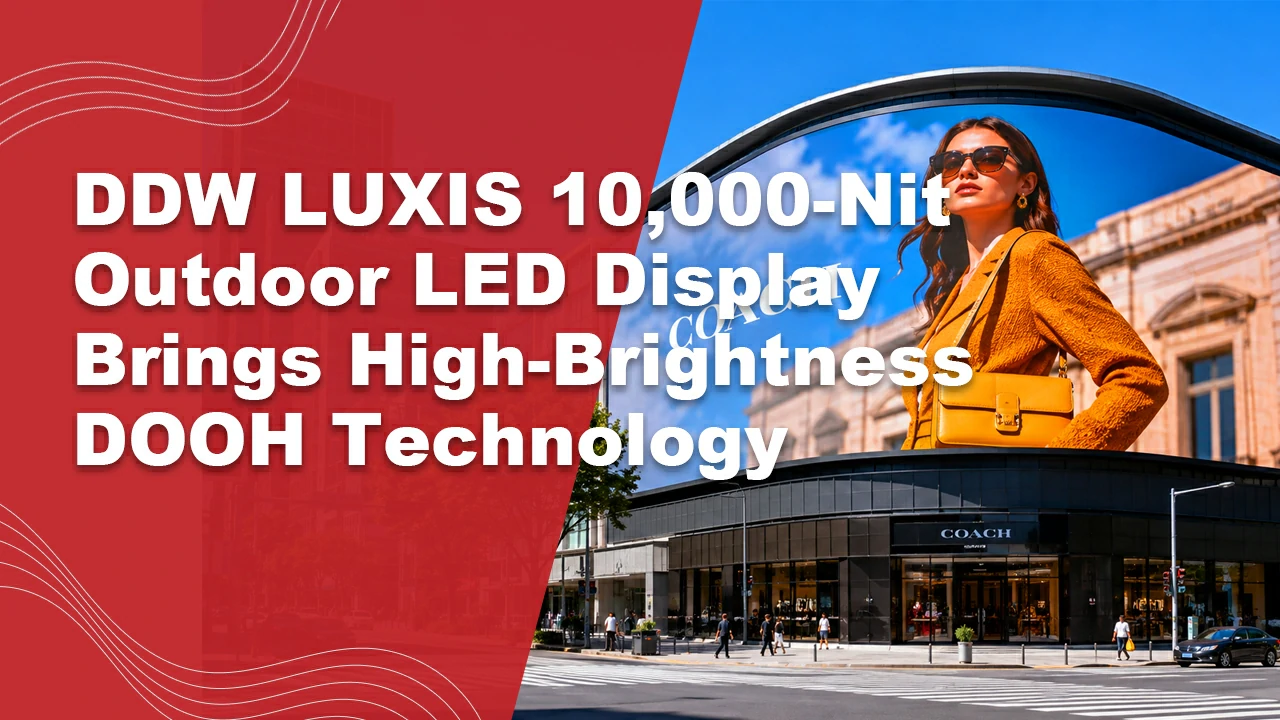
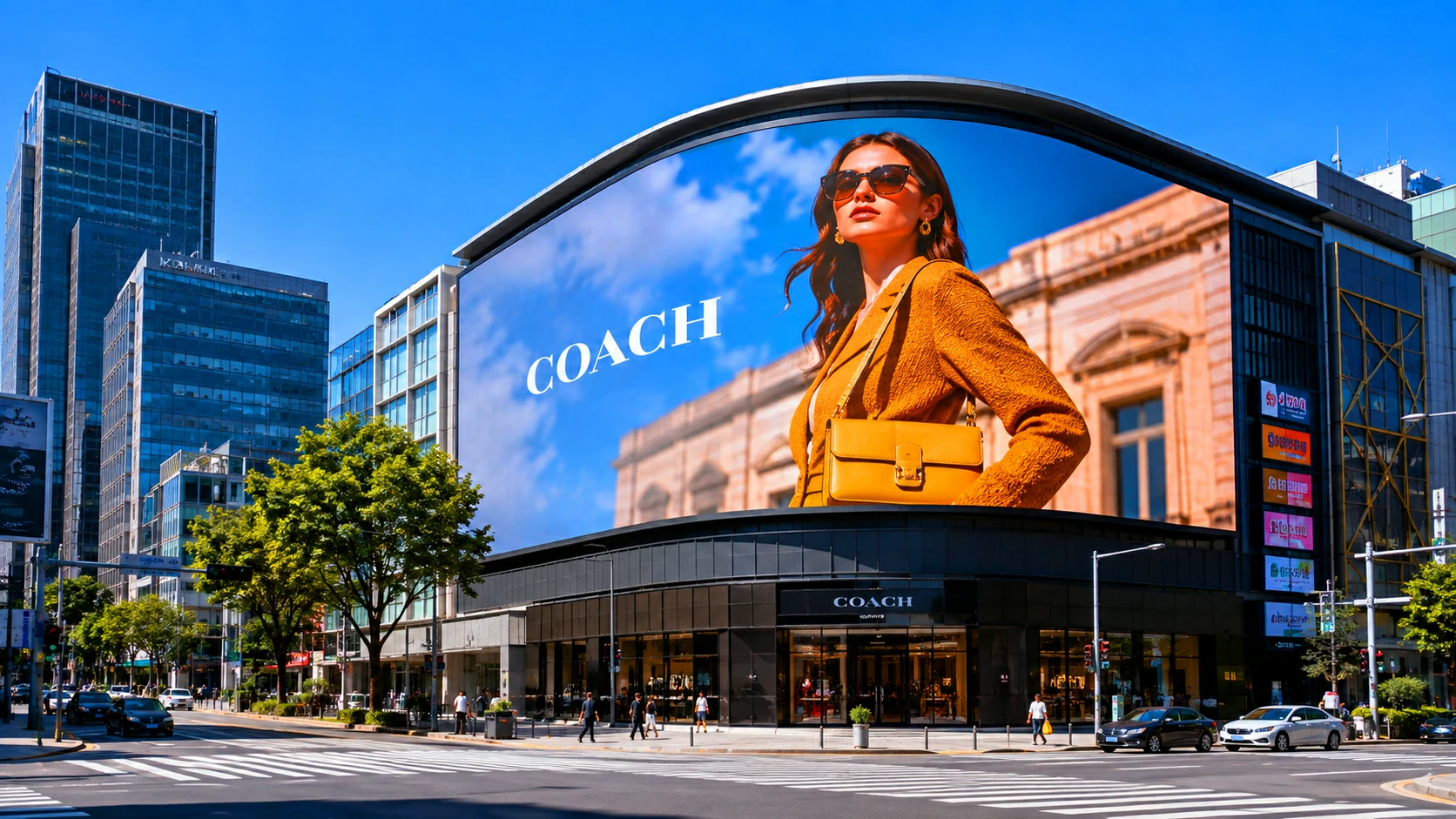
These questions helped shape the outdoor LED screen, a high-brightness outdoor LED display platform developed for DOOH advertising, outdoor 3D billboards, stadiums, transportation infrastructure, commercial façades and smart-city applications.
LUXIS combines up to 10,000 nits brightness, ≥7680Hz refresh rate, Flip-Chip LED technology, dual-voltage energy-saving architecture, IP65 front and rear protection, extruded-aluminum cabinets and intelligent module monitoring.
LUXIS at a Glance
For buyers comparing outdoor LED platforms, these are the key LUXIS specifications.
| Key Specification | Série LUXIS |
|---|---|
| Pas de pixels | P3.91 / P4.81 / P5.68 / P5.71 / P6.66 / P8 / P10 |
| Maximum Brightness | Up to 10,000 nits |
| Refresh Rate | ≥7680Hz |
| Niveaux de gris | 16-bit |
| Maximum Contrast | Up to ≥30,000:1 |
| Type de LED | HY2020 |
| Technologie LED | Flip-Chip |
| Protection | IP65 Front / Rear |
| Cabinet Options | 500×500mm / 960×960mm |
| Structure | Extruded Aluminum |
| Maintenance | Front & Rear |
| Energy Saving | Up to approximately 30% |
| Operating Temperature | -20°C to +50°C |
The value of these specifications is not any single number. It is how brightness, image quality, power efficiency, thermal management and serviceability work together in a real outdoor installation.
Why 10,000 Nits Is Only Part of the Story
Outdoor LED displays often compete directly with sunlight.
A roadside billboard, shopping-center façade or city-center media screen may receive intense ambient light for hours every day. When brightness is insufficient, content loses visibility and visual impact.
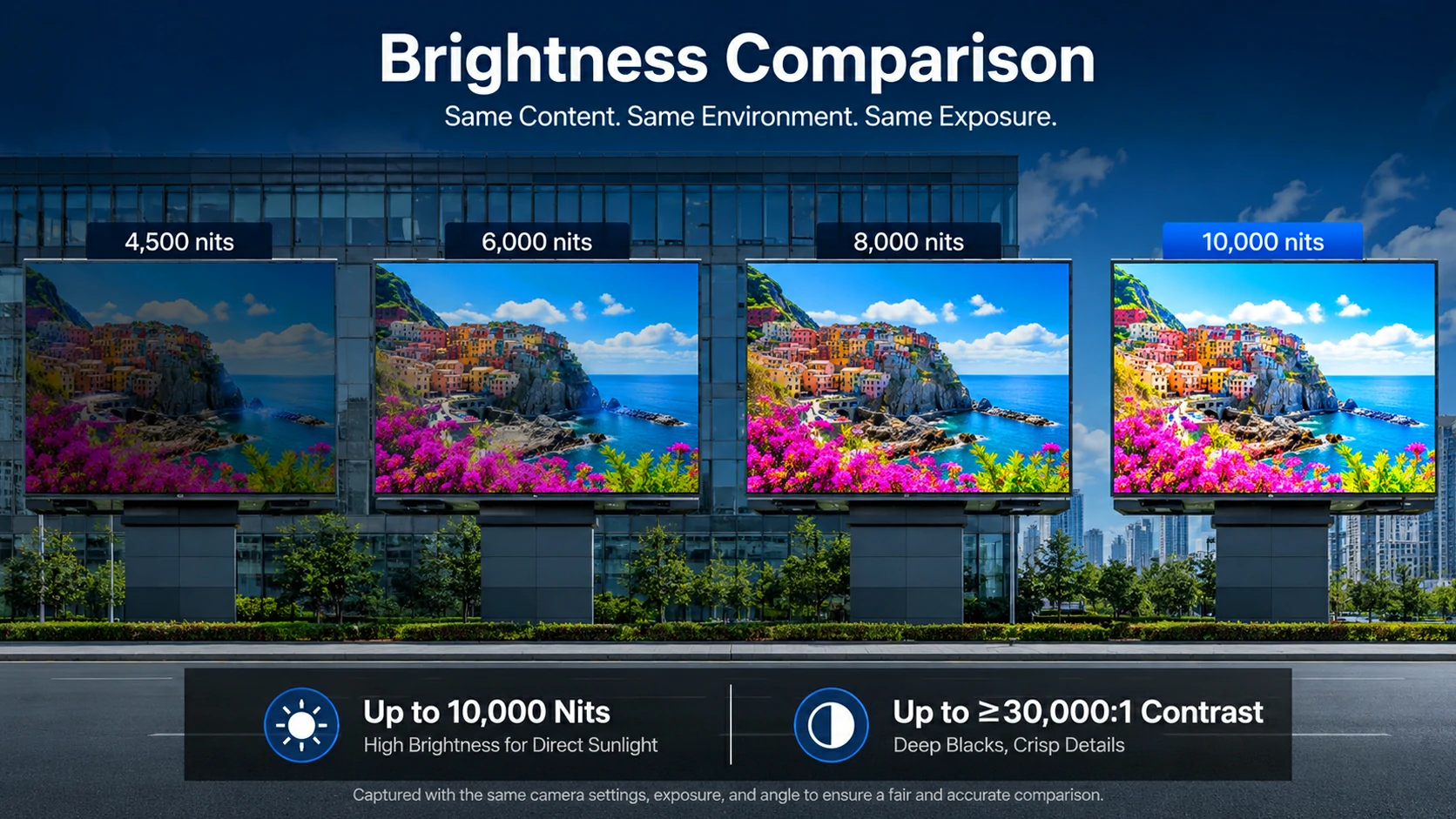
LUXIS provides up to 10,000 nits of white-balance brightness, giving integrators more headroom for demanding direct-sunlight environments.
But brightness without contrast can still produce a flat-looking image.
Across the LUXIS range, contrast ratios extend from ≥12,000:1 on P3.91 up to ≥30,000:1 on P10. Higher contrast helps preserve darker blacks, brighter highlights and clearer separation between visual elements.
A simple way to explain it is:
Brightness helps viewers see the screen.
Contrast helps viewers see the content.
This becomes particularly important for DOOH advertising using dark backgrounds, product photography, brand colors or detailed graphics.
That is why outdoor LED performance should be evaluated through brightness + contrast + real-world daylight visibility, rather than peak nits alone.
Équipement professionnel d'étalonnage : colorimètre à imagerie NovaStar NOS-CC60
Afin d'obtenir des résultats précis lors de l'étalonnage des écrans LED, DDW utilise du matériel de mesure professionnel, notamment NovaStar Colorimètre à imagerie NOS-CC60.
Le NovaStar NOS-CC60 est un appareil de calibrage d'écrans LED de haute précision, conçu pour mesurer la luminosité et la chromaticité des écrans LED. Il permet de corriger les problèmes de non-uniformité de l'affichage et d'améliorer la cohérence de l'écran après calibrage.
Au cours du processus d'étalonnage, le NOS-CC60 recueille les données d'image de l'écran LED et analyse :
- Différences de luminosité
- Écart de couleur RVB
- Cohérence chromatique
- Uniformité de l'écran
Cet équipement est adapté aux applications LED haut de gamme telles que :
- Écrans LED à pas de pixel fin
- Écrans Mini LED
- Écrans Micro LED
- Murs vidéo LED professionnels à usage commercial
Grâce à des données de mesure et d'étalonnage précises, les ingénieurs de DDW peuvent générer des paramètres de correction optimisés et améliorer le rendu final à l'écran.
Flip-Chip Technology for High-Brightness Outdoor LED
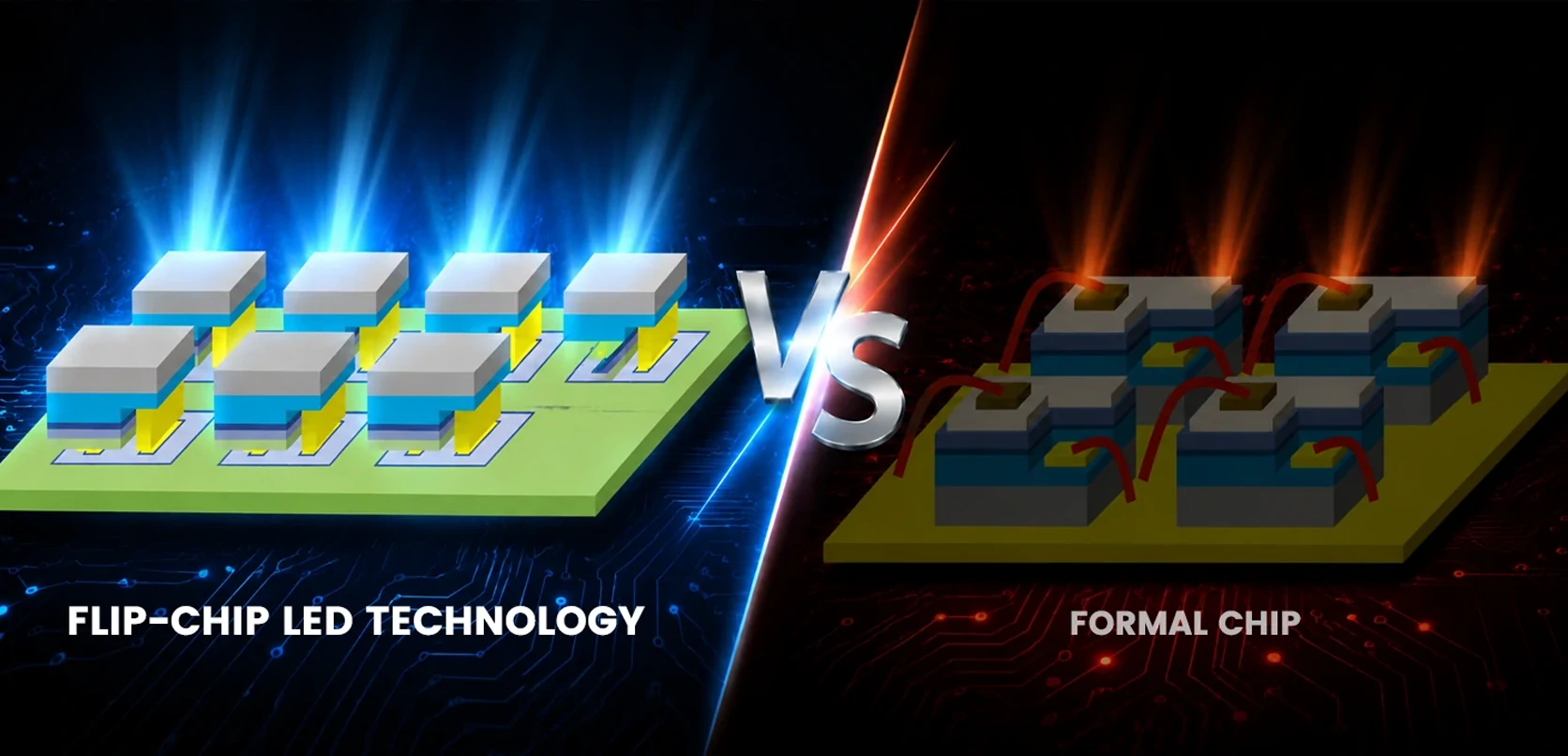
LUXIS uses an HY2020 LED package with Flip-Chip architecture.
Compared with conventional wire-bond structures, Flip-Chip changes the electrical and physical arrangement of the LED package, supporting the optical and thermal requirements of high-brightness outdoor applications.
For a professional LED display, package technology can influence:
- brightness and contrast;
- thermal behavior;
- power efficiency;
- structural durability;
- long-term operating stability.
These differences become more important as screen size increases.
On a small screen, a modest efficiency difference may appear insignificant. On a 200m² or 500m² billboard operating every day, heat generation, energy efficiency and component stability become part of the project’s long-term economics.
Energy Efficiency Matters More as Screens Get Larger
Purchase price is only one part of the cost of a large outdoor LED screen.
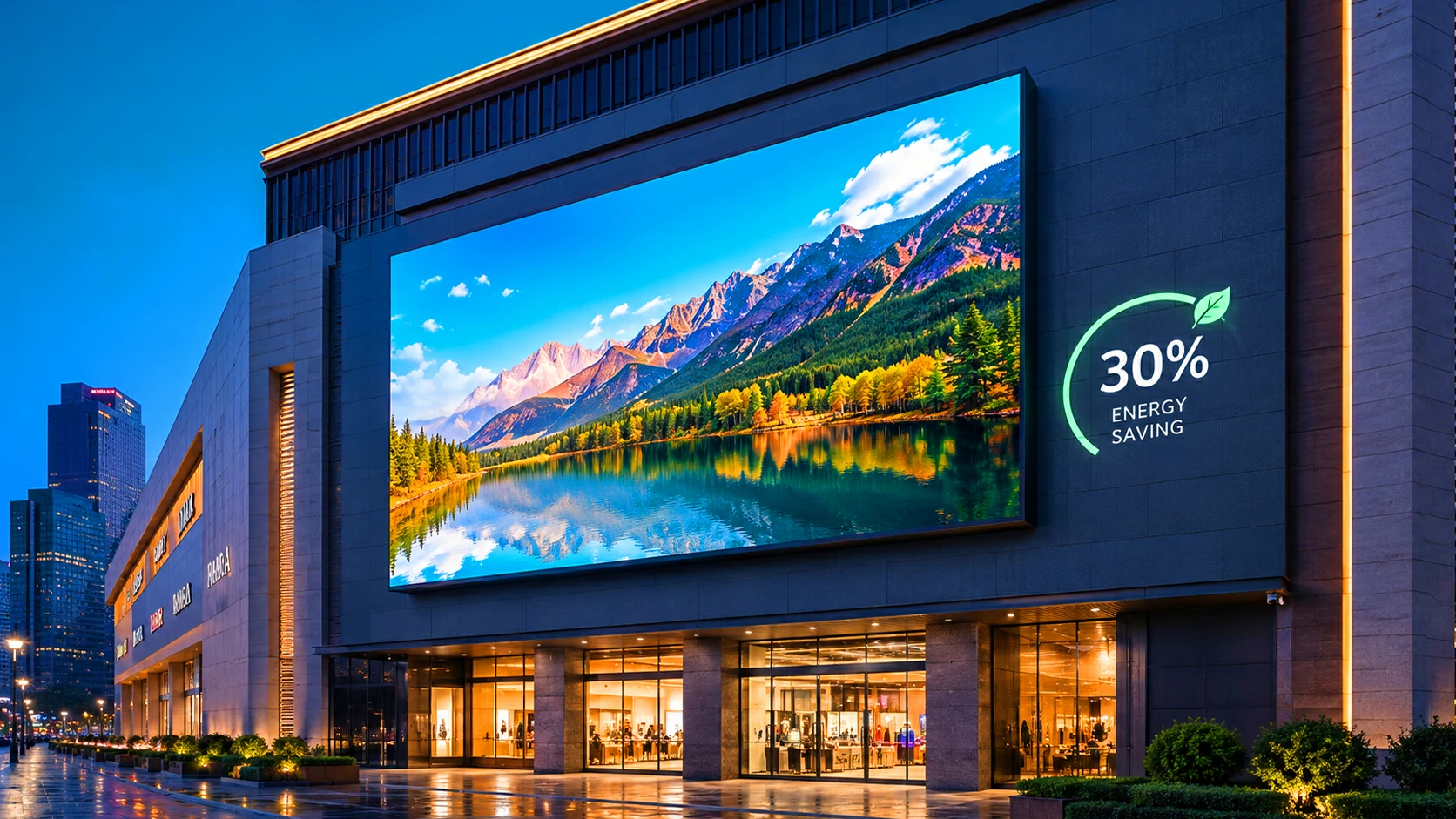
A digital billboard may operate 12, 16 or even 24 hours per day. Over several years, electricity can become a significant operating expense.
LUXIS uses a dual-voltage driving architecture designed to manage RGB operating voltage more efficiently and reduce unnecessary energy loss.
Depending on configuration and operating conditions, the system is designed to provide up to approximately 30% energy savings compared with conventional driving approaches.
For P3.91, P4.81 and P5.68:
Maximum / Average Power: approximately 750 / 240 W/m²
For P5.71, P6.66, P8 and P10:
Maximum / Average Power: approximately 650 / 220 W/m²
For DOOH operators, this changes the purchasing question from:
“How much does the screen cost per square meter?”
to:
“What will the screen cost to own and operate over five years?”
For a large-format installation, total cost of ownership can be just as important as initial hardware cost.
Why 7680Hz Matters in a Camera-First World
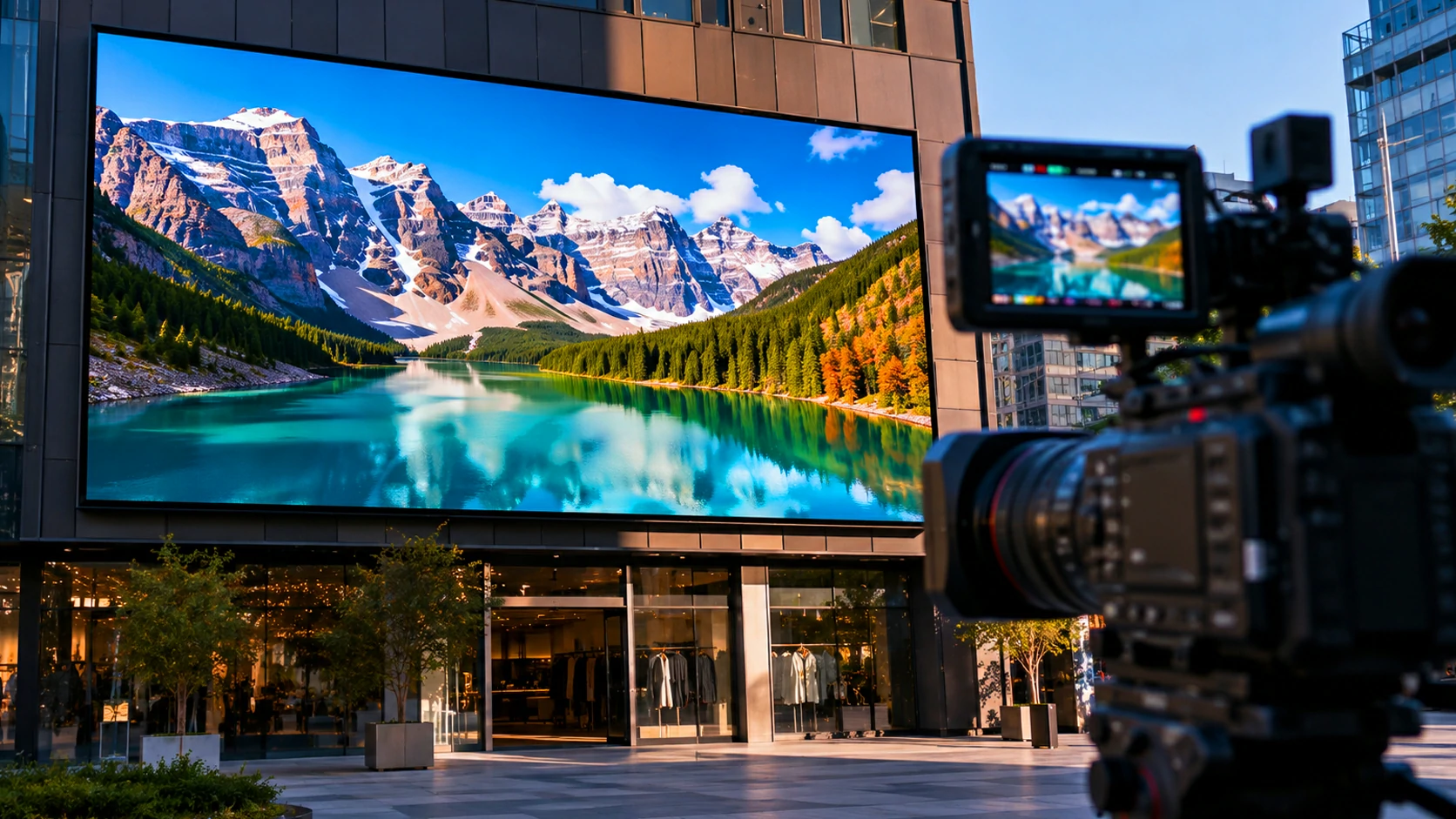
Outdoor LED screens are increasingly viewed through cameras as well as by the human eye.
Smartphones, broadcast cameras and livestream systems can reveal scan lines or flicker that may not be obvious to someone standing in front of the display.
LUXIS supports a ≥7680Hz refresh rate with 16-bit grayscale processing, helping deliver cleaner camera capture and smoother visual performance.
This is especially relevant for:
- outdoor 3D billboards;
- stadium displays;
- landmark DOOH installations;
- broadcast environments;
- displays frequently filmed for social media.
For high-profile public displays, camera performance is becoming less of a premium option and more of a practical project consideration.
Outdoor Reliability Is an Engineering System
Outdoor reliability depends on how several systems work together.
High brightness creates heat. Permanent outdoor installation introduces rain, dust, humidity and temperature changes. Large screens also need practical maintenance access.
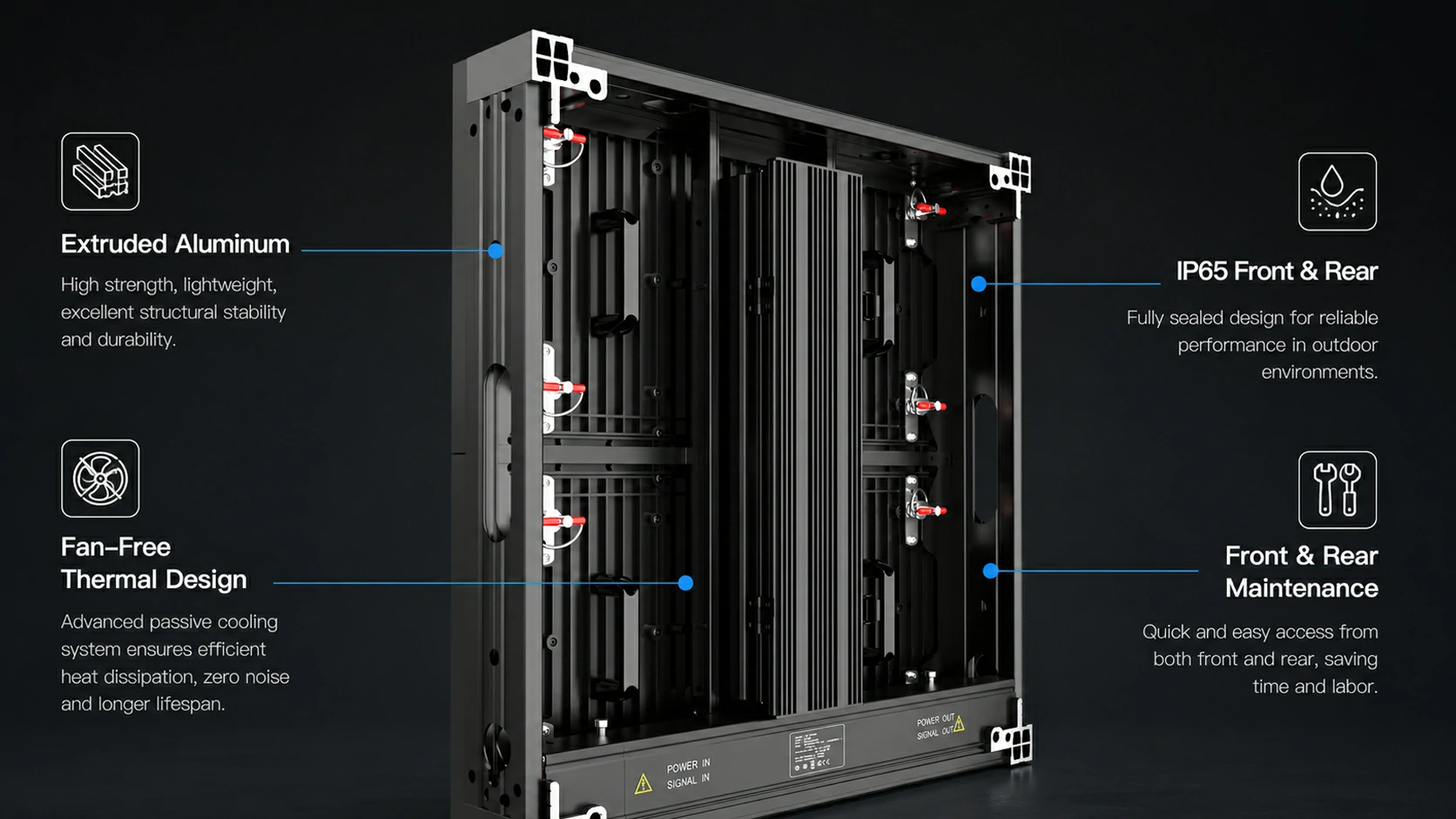
LUXIS uses an extruded-aluminum cabinet structure designed to support efficient heat dissipation through natural convection and fan-free thermal management.
The cabinet provides IP65 protection on both the front and rear and supports operating temperatures from -20°C to +50°C.
LUXIS also supports front and rear maintenance.
For a wall-mounted screen with limited rear access, technicians can service the display from the front. For conventional structures with a maintenance corridor, rear access remains available.
Intelligent module monitoring adds access to information such as voltage, signal status, temperature, diagnostics and calibration data.
Together, these features are designed to make a large outdoor LED installation easier to operate and maintain over its service life.
LUXIS Outdoor LED Display Specifications
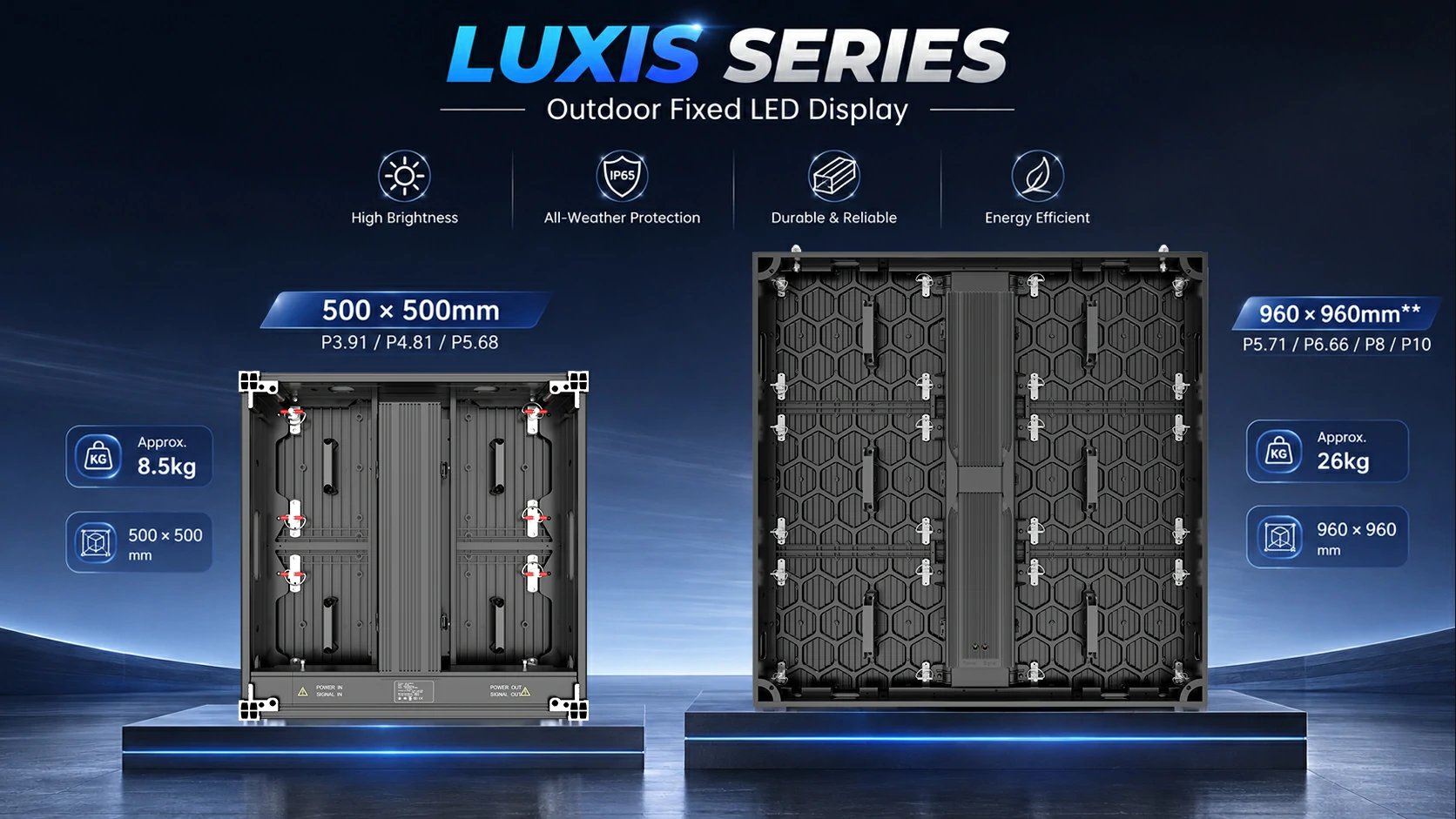
LUXIS covers seven pixel pitches using two cabinet formats.
| Pas de pixels | Cabinet Size | Luminosité | Contraste | Refresh Rate | Max / Avg Power |
|---|---|---|---|---|---|
| P3,91 | 500×500×91mm | 10,000 nits | ≥12,000:1 | ≥7680Hz | 750 / 240 W/m² |
| P4.81 | 500×500×91mm | 10,000 nits | ≥15,000:1 | ≥7680Hz | 750 / 240 W/m² |
| P5.68 | 500×500×91mm | 10,000 nits | ≥18,000:1 | ≥7680Hz | 750 / 240 W/m² |
| P5.71 | 960×960×97mm | 10,000 nits | ≥18,000:1 | ≥7680Hz | 650 / 220 W/m² |
| P6.66 | 960×960×97mm | 10,000 nits | ≥20,000:1 | ≥7680Hz | 650 / 220 W/m² |
| P8 | 960×960×97mm | 10,000 nits | ≥25,000:1 | ≥7680Hz | 650 / 220 W/m² |
| P10 | 960×960×97mm | 10,000 nits | ≥30,000:1 | ≥7680Hz | 650 / 220 W/m² |
Le 500×500×91mm cabinet, used for P3.91, P4.81 and P5.68, weighs approximately 8.5kg and provides greater flexibility for screen dimensions.
Le 960×960×97mm cabinet, used for P5.71, P6.66, P8 and P10, weighs approximately 26kg and is suited to larger-format outdoor installations where fewer cabinets and connection points can simplify construction.
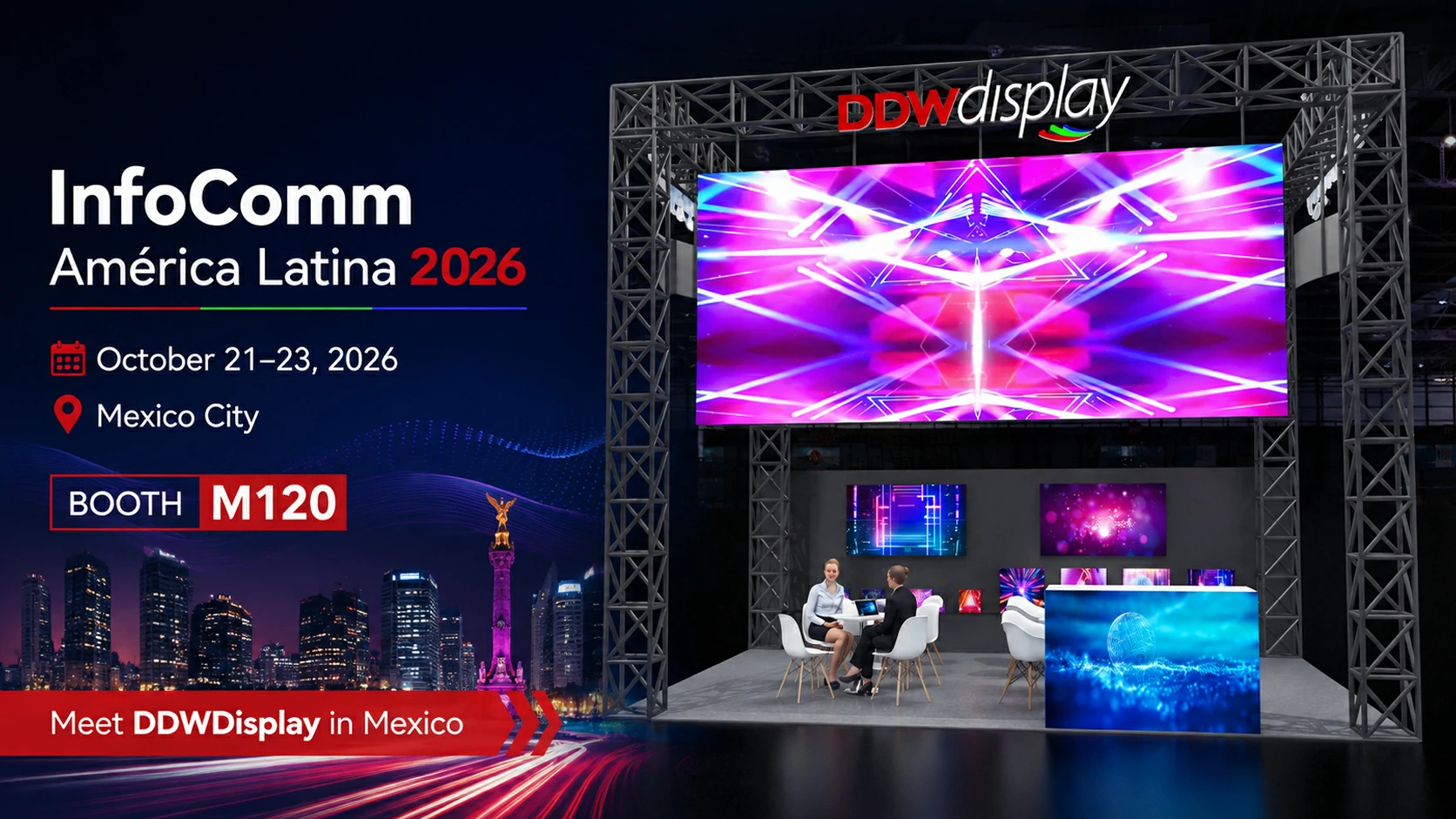
Meet DDWDisplay at InfoComm América Latina 2026 — Booth M120
In October 2026, DDWDisplay will meet AV professionals, distributors, integrators and project partners at InfoComm América Latina 2026 in Mexico City.
The event brings together the professional AV industry across digital signage, visualization, video, collaboration and integrated audiovisual technologies.
DDWDisplay Exhibition Information
Date : October 21–23, 2026
Lieu : Mexico City, Mexico
Booth: M120
Official Booth M120 Floor Plan:
https://ical26.mapyourshow.com/8_0/floorplan/?hallID=campus&level=3&selectedBooth=booth%7EM120
InfoComm América Latina Official Website:
https://www.infocomm-americalatina.org/
AVIXA:
https://www.avixa.org/
DDWDisplay Exhibition Preview:
https://www.ddw.net/news/ddw-at-infocomm-america-latina-2026-mexico/
We welcome AV integrators, LED distributors, DOOH operators, rental companies, project contractors and commercial AV professionals to visit the DDWDisplay team at Booth M120.
It will be an opportunity to discuss outdoor LED, rental LED, COB, transparent LED and other professional display projects directly with our team.
More Than Outdoor LED Displays
LUXIS is part of DDWDisplay’s broader professional LED display portfolio.
Our product range includes rental LED displays, indoor and outdoor fixed LED displays, COB and Quantum Dot COB displays, transparent LED displays, LED posters and all-in-one displays, creative and flexible LED displays, XR and virtual production LED systems, and sports LED displays.
These products serve applications including live events, retail, corporate AV, DOOH advertising, smart cities, transportation, sports venues and immersive production.
Explore DDWDisplay:
Live Events & Entertainment:
écran LED de location
Corporate & Mission Critical:
control room LED screen
XR & Immersive Experiences:
XR LED display
Outdoor Media & Smart Cities:
https://www.ddw.net/solutions/outdoor-media-smart-cities/
Sports & Community Spaces:
https://www.ddw.net/solutions/sports-community-spaces/
Transportation & Infrastructure:
https://www.ddw.net/solutions/transportation-infrastructure/
What Should Buyers Really Compare?
If I were evaluating a large outdoor LED project today, I would start with the application rather than the highest specification on a datasheet.
How much direct sunlight will the screen receive?
How many hours will it operate every day?
How far away are the viewers?
Will professional cameras frequently record it?
How will technicians access the display?
And what will electricity and maintenance cost over five years?
Once these questions are answered, pixel pitch, brightness, cabinet size and power architecture become much easier to select.
The engineering goal is not simply to make an outdoor LED screen brighter.
It is to balance:
Brightness + Contrast + Energy Efficiency + Thermal Performance + Serviceability + Reliability
That is the direction we are pursuing with LUXIS.
— Steven Cheung, Founder & CEO, DDWDisplay
Frequently Asked Questions About LUXIS
How bright is the DDW LUXIS outdoor LED display?
LUXIS provides maximum white-balance brightness of up to 10,000 nits, making it suitable for demanding outdoor environments and direct-sunlight applications.
Quels sont les pas de pixels disponibles ?
LUXIS is available in P3.91, P4.81, P5.68, P5.71, P6.66, P8 and P10.
What refresh rate does LUXIS support?
LUXIS supports ≥7680Hz refresh rate with 16-bit grayscale, helping improve camera capture and reduce visible scan lines under suitable camera settings.
Is LUXIS suitable for permanent outdoor installation?
Yes. LUXIS provides IP65 front and rear protection and uses an extruded-aluminum cabinet structure.
Can LUXIS be serviced from the front?
Yes. LUXIS supports both front and rear maintenance.
How energy efficient is LUXIS?
Its dual-voltage architecture is designed to provide up to approximately 30% energy savings, depending on configuration, brightness, content and operating conditions.
What cabinet sizes are available?
LUXIS uses 500×500mm cabinets for P3.91, P4.81 and P5.68, et 960×960mm cabinets for P5.71, P6.66, P8 and P10.
Where can I meet DDWDisplay in Mexico in 2026?
DDWDisplay will exhibit at InfoComm América Latina 2026 in Mexico City, October 21–23, 2026.
Visit us at:
Booth M120
Official booth location:
https://ical26.mapyourshow.com/8_0/floorplan/?hallID=campus&level=3&selectedBooth=booth%7EM120
Talk to DDWDisplay About Your Outdoor LED Project
Every outdoor LED project has different requirements.
Screen dimensions, viewing distance, pixel pitch, brightness, operating hours, installation structure, power distribution and maintenance access should be evaluated together.
If you are planning a DOOH billboard, outdoor 3D LED screen, stadium display, commercial façade, transportation display or smart-city project, talk to DDWDisplay about the application and the most appropriate configuration.
Explore the LUXIS Series:
outdoor LED screen
View DDWDisplay Project Cases:
https://www.ddw.net/case-studies/
Contact DDWDisplay:
https://www.ddw.net/contact/
À propos de l'auteur
Steven Cheung
Founder & CEO, DDWDisplay
Steven Cheung works with the DDWDisplay team on professional LED display technologies, international business development and overseas projects across outdoor advertising, live events, commercial AV, COB displays, transparent LED displays and XR applications.
Email: info@ddw.net
Mobile / WhatsApp: +86 134 1755 8100
Website: https://www.ddw.net/
DDWDisplay — Display for Better.