
Quick answer: Energy-saving LED displays support ESG goals by cutting power consumption through common cathode driving, high-efficiency LEDs and power supplies, automatic brightness control and black-screen power saving, while longer lifespans and repairable designs reduce waste.
ESG & Energy Saving
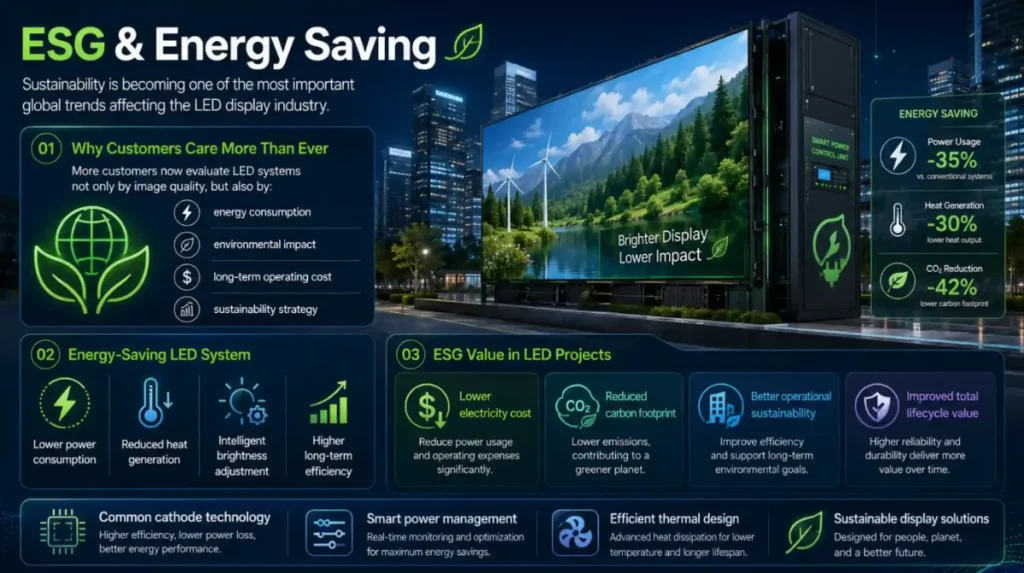
Sustainability is becoming one of the most important global trends affecting the LED display industry.
More customers now evaluate LED systems not only by image quality, but also by:
- energy consumption
- impacto medioambiental
- long-term operating cost
- sustainability strategy
Why Energy Consumption Is Becoming More Important
Large LED installations may operate continuously for many years.
Esto es especialmente cierto en el caso de:
- publicidad exterior
- sistemas para estadios
- pantallas de transporte
- centros de comando
- retail redes de medios de comunicación
Power efficiency directly affects:
- coste de explotación
- thermal pressure
- carbon footprint
Why Common Cathode Technology Is Growing
Many high-efficiency LED systems now use:
- common cathode architecture
- ajuste inteligente del brillo
- efficient driver IC
- optimized power management
These technologies help reduce:
- power consumption
- generación de calor
- long-term operating cost
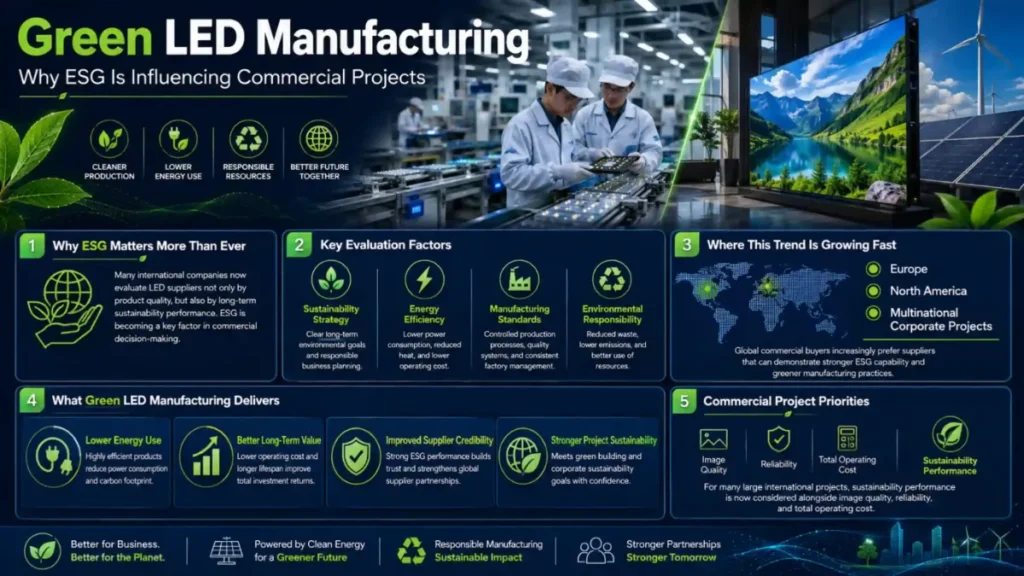
Why ESG Is Influencing Commercial Projects
Many international companies now evaluate suppliers based on:
- sustainability strategy
- eficiencia energética
- manufacturing standards
- environmental responsibility
This trend is becoming especially important in:
- Europa
- América del Norte
- multinational corporate projects
DDW Engineer Notes: ESG and energy-saving LED displays
Many customers still focus mainly on initial hardware pricing.
However, for long-hour operation systems, total lifecycle cost is often much more important than purchase cost alone.
Energy-efficient systems usually improve:
- fiabilidad a largo plazo
- estabilidad térmica
- operating sustainability
at the same time.
ESG Trends in LED Displays
| Trend | What Is Changing | What It Means for Buyers |
|---|---|---|
| Lower power | Common cathode and efficient ICs | Lower electricity bills and emissions |
| Smart brightness | Sensors and scheduling | Less energy at night and in shade |
| Longer lifespan | Better heat management and materials | Fewer replacements and less e-waste |
| Repairability | Modular, serviceable designs | Longer useful life for each screen |
| Reporting | Clients ask for energy data | Choose suppliers that document power use |
FAQ
How do LED displays support ESG goals?
Through lower energy consumption, longer lifespans, repairable designs and reduced waste compared with frequent replacements.
What is the most effective energy-saving technology for LED screens?
Common cathode driving combined with automatic brightness control usually gives the largest savings.
Do energy-saving LED displays cost more?
They can cost slightly more upfront but typically pay back through lower electricity costs over the screen’s life.
Related LED Display Guides
- Energy-saving LED display technology
- Common cathode vs common anode LED
- Smart city LED displays
- The future of LED displays
Recommended DDW products: FC Series energy-saving outdoor LED screen · KCOB Series COB LED video wall