
El parpadeo de la pantalla es uno de los problemas más frustrantes de las pantallas LED, ya que puede producirse únicamente en determinadas condiciones.
In many cases, the screen may look completely normal to the human eye while still flickering heavily on camera.
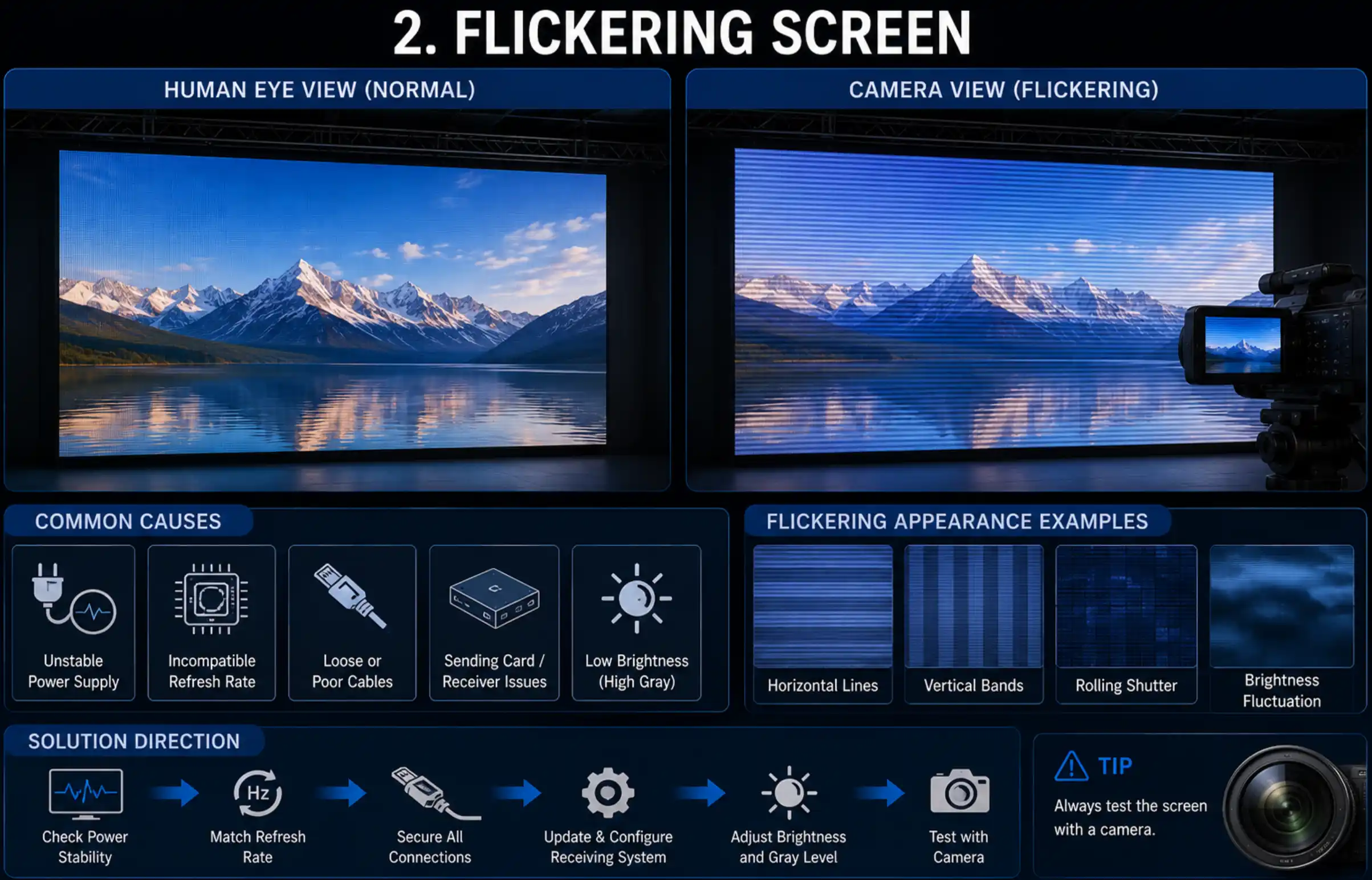
Why Flickering Happens
Flickering may be caused by:
- low refresh rate
- unstable signal transmission
- power instability
- driver IC problems
- grounding issues
- synchronization mismatch
Esto se vuelve especialmente crítico en:
- Estudios XR
- entornos de radiodifusión
- retransmisión en directo
- conference recording
- esports events
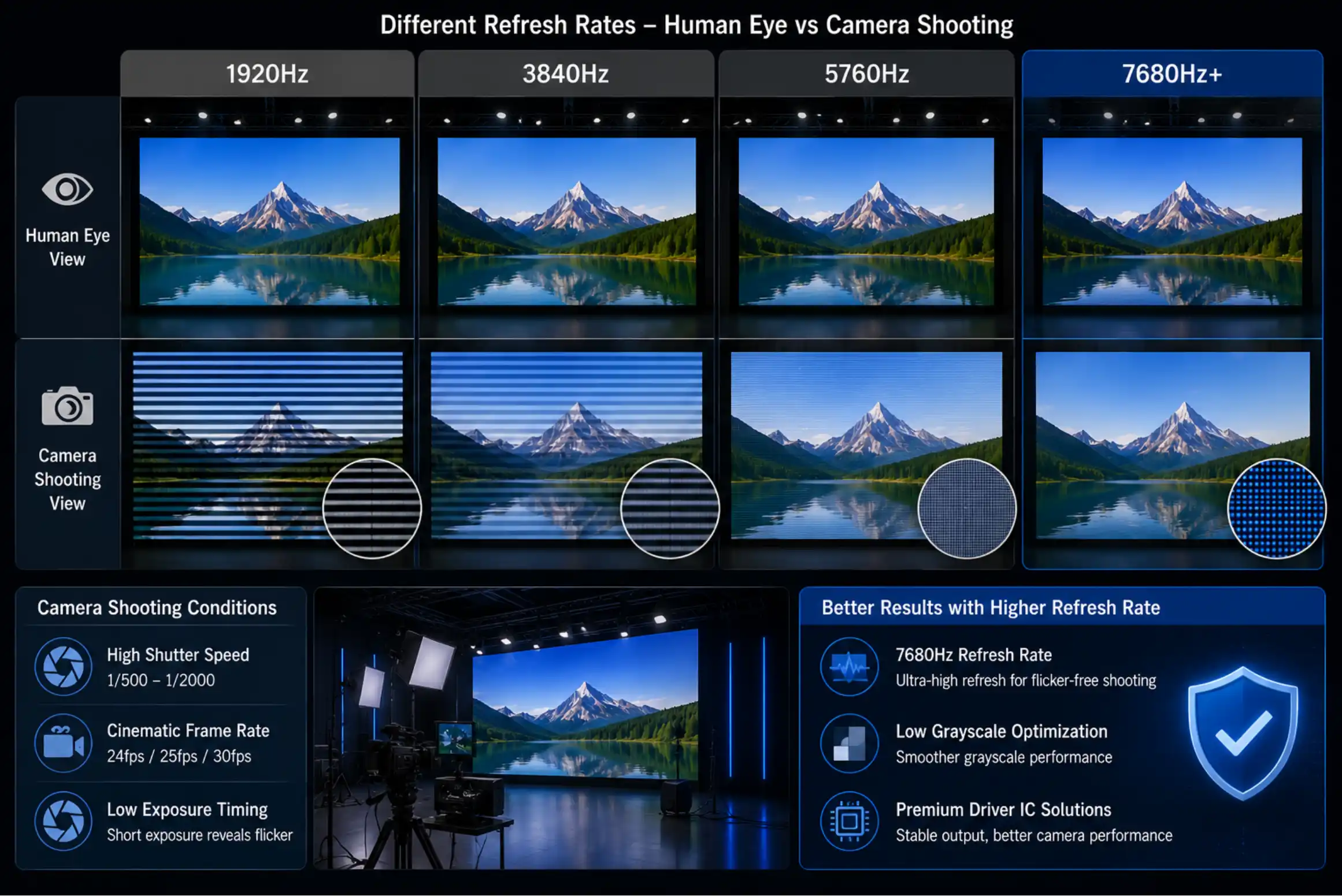
Why Camera Shooting Makes Flickering Worse
Modern cameras often use:
- alta velocidad de obturación
- frecuencias de fotogramas cinematográficas
- low exposure timing
This may reveal flickering that is invisible during normal viewing.
This is why many XR and broadcast environments now require:
- Frecuencia de actualización de 7680 Hz
- Optimización para escalas de grises bajas
- premium driver IC solutions
Why Power Quality Also Matters
In some outdoor projects, unstable electrical infrastructure may create:
- voltage fluctuation
- grounding interference
- signal instability
These problems may eventually cause intermittent flickering.
Esto es especialmente habitual en:
- eventos temporales
- outdoor festivals
- producciones itinerantes
- developing market installations
Notas de ingeniería del DDW
Many customers initially assume flickering is caused only by refresh rate.
In reality, LED flickering is often the result of multiple systems interacting together, including:
- signal chain
- camera settings
- power quality
- driver IC architecture
Professional troubleshooting should always analyze the entire display system, not only one specification.