
Quick answer: Energy-saving LED displays reduce power consumption through common cathode driving, high-efficiency LED chips, efficient power supplies and automatic brightness control. Together these can cut energy use by roughly 30–50% compared with conventional designs, especially for outdoor LED screens running long hours.
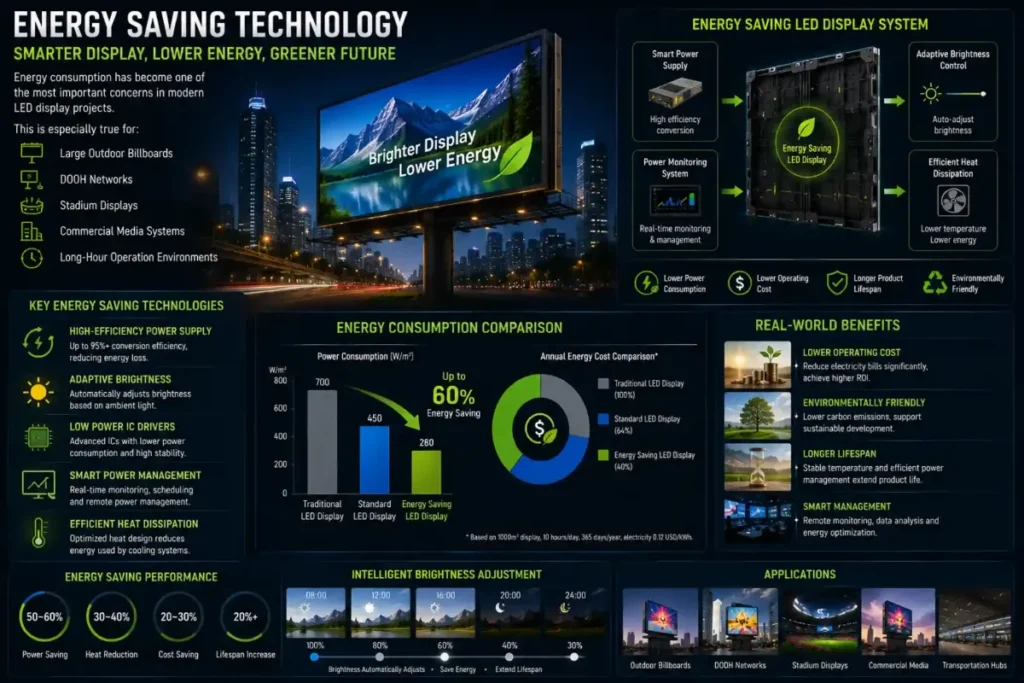
Tecnologia per il risparmio energetico
Il consumo energetico è diventato una delle principali preoccupazioni nei moderni progetti di display a LED.
Ciò vale in particolare per:
- grandi cartelloni pubblicitari all’aperto
- Reti DOOH
- schermi dello stadio
- sistemi multimediali commerciali
- ambienti operativi con orari prolungati
Perché l'efficienza energetica è oggi più importante che mai
I grandi progetti a LED possono comportare un consumo elettrico considerevole nel corso del tempo.
Nel caso di progetti operativi a lungo termine, l’efficienza energetica incide direttamente su:
- costo operativo
- calore generation
- pressione del sistema di alimentazione
- impatto ambientale
Ecco perché molti governi e operatori commerciali danno ormai la priorità ai sistemi a LED a risparmio energetico.
Misure comuni di risparmio energetico
Metodi
I moderni sistemi a LED spesso migliorano l'efficienza grazie a:
- catodo comune technology
- regolazione intelligente della luminosità
- circuiti integrati di pilotaggio efficienti
- alimentatori ottimizzati
- ottimizzazione della gestione termica
DDW Engineer Notes: Energy-saving LED display technology
In molti progetti all'aperto, la gestione del calore e il consumo energetico sono strettamente correlati.
Un minor consumo energetico non solo riduce i costi dell'elettricità, ma contribuisce anche a migliorare:
- temperatura dell'armadio
- stabilità a lungo termine
- durata di vita dei componenti
Ciò assume particolare importanza nelle installazioni all’aperto in Medio Oriente.
Main Energy-Saving Methods
- Common cathode driving: supplies each color with only the voltage it needs.
- High-efficiency LEDs: more brightness per watt.
- Automatic brightness: light sensors dim the screen at night or in shade.
- Efficient power supplies: higher conversion efficiency and power factor.
- Black-screen power saving: modules idle when showing black content.
FAQ
How much energy can an energy-saving LED display save?
Depending on design and use, energy-saving LED displays commonly save around 30–50% compared with conventional LED screens.
What is the average power consumption of an LED screen?
Average consumption is usually around one-third of maximum power; outdoor LED displays often average 250–450 W/m².
Does energy saving reduce LED brightness?
No. Energy-saving designs aim to deliver the same brightness with less power and lower heat.
Related LED Display Guides
- Common cathode vs common anode LED
- LED display heat dissipation
- LED display brightness (nits)
- LED screen lifespan
- ESG and energy-saving LED displays
Recommended DDW products: FC Series energy-saving outdoor LED screen · FA Series outdoor LED screen