
Quick answer: Heat is a main cause of LED screen failure, color shift and shortened lifespan. LED displays are cooled through aluminum cabinets and module design (passive cooling), fans or air conditioning for enclosed outdoor structures, and energy-efficient designs like common cathode that produce less heat in the first place.
Dissipazione del calore
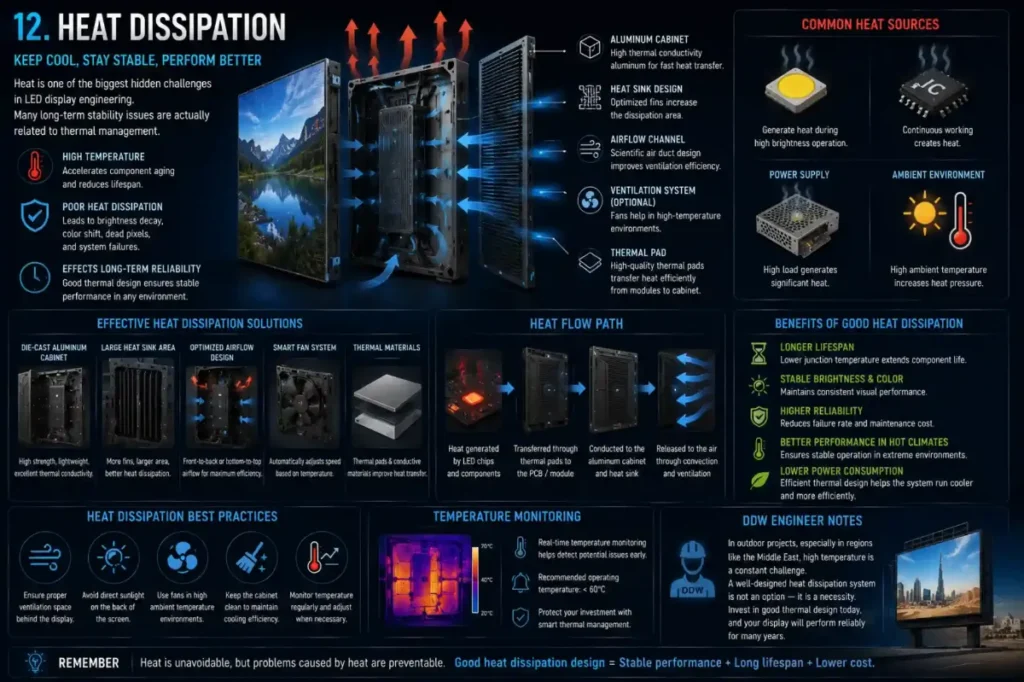
Il calore rappresenta una delle maggiori sfide nascoste nella progettazione dei display a LED.
Molti problemi di stabilità a lungo termine sono in realtà legati alla gestione termica.
Perché il calore è un problema così grave
I display a LED generano calore in modo continuo durante il funzionamento.
Una gestione termica inadeguata può causare:
- invecchiamento dell'alimentatore
- incongruenza cromatica
- luminosità reduction
- shortened durata della vita
- aumento dei tassi di guasto
Perché i progetti all’aperto sono sottoposti a maggiori sollecitazioni termiche
Le installazioni all'aperto devono essere in grado di:
- luce solare diretta
- temperatura ambiente elevata
- ambienti con armadi chiusi
- funzionamento continuo
Ciò assume particolare importanza nei seguenti casi:
- Progetti in Medio Oriente
- regioni tropicali
- cartelloni pubblicitari ad alta luminosità
Metodi comuni di dissipazione del calore
I sistemi LED professionali ottimizzano solitamente le prestazioni termiche attraverso:
- strutture in alluminio
- progettazione del flusso d'aria
- sistemi di ventilazione
- circuiti ad alta efficienza energetica
- ottimizzazione dei materiali termici
DDW Engineer Notes: LED display heat dissipation
Molti guasti ai LED da esterno non sono causati dai chip LED stessi.
Al contrario, il surriscaldamento spesso accelera l'invecchiamento a lungo termine di:
- alimentatori
- circuiti integrati di pilotaggio
- ricezione delle schede
Una buona gestione termica è uno dei presupposti fondamentali per l'affidabilità dei sistemi a LED.
Cooling Methods Compared
| Method | Ideale per | Note |
|---|---|---|
| Fanless (passive) | Indoor, rental, fine pitch | Silent; relies on aluminum cabinets |
| Fans | Outdoor cabinets | Need dust filters and maintenance |
| Air conditioning | Enclosed outdoor structures | Controls temperature and humidity |
| Common cathode | All types | Reduces heat at the source |
FAQ
What temperature is safe for an LED display?
Most LED displays operate within about -20 °C to +50 °C ambient; internal temperatures should be kept well below component limits.
Do outdoor LED screens need air conditioning?
Large enclosed outdoor LED structures in hot climates often do; open-back or well-ventilated designs may only need fans.
How does heat affect LED lifespan?
Higher temperatures accelerate LED brightness decay and component aging, shortening the LED screen’s useful life.
Related LED Display Guides
- Common cathode vs common anode LED
- Energy-saving LED display technology
- LED screen lifespan
- LED display brightness (nits)
Recommended DDW products: FC Series energy-saving outdoor LED screen · FA Series outdoor LED screen