
Quick answer: Heat is a main cause of LED screen failure, color shift and shortened lifespan. LED displays are cooled through aluminum cabinets and module design (passive cooling), fans or air conditioning for enclosed outdoor structures, and energy-efficient designs like common cathode that produce less heat in the first place.
열 방출
열은 LED 디스플레이 엔지니어링 분야에서 가장 큰 숨겨진 과제 중 하나입니다.
많은 장기 안정성 문제는 사실 열 관리와 관련이 있습니다.
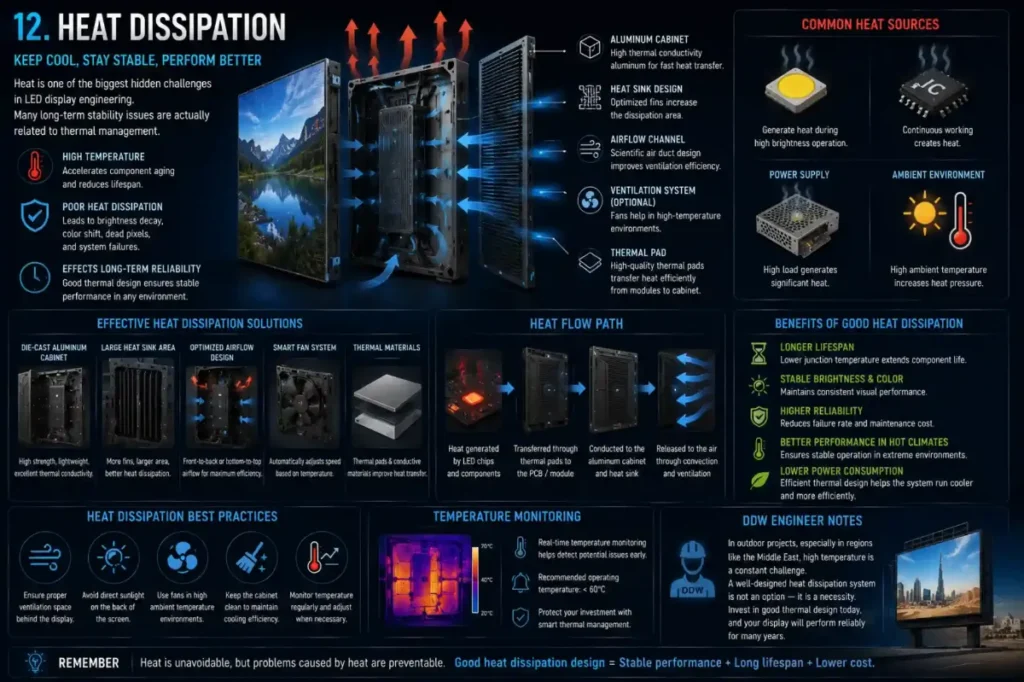
왜 더위가 그렇게 큰 문제인가
야외 프로젝트가 더 큰 열적 부담을 겪는 이유
실외 설치 시 다음 사항을 고려해야 합니다:
- 직사광선
- 높은 주변 온도
- 밀폐형 캐비닛 환경
- 연속 운전
다음과 같은 경우 특히 중요해집니다:
- 중동 프로젝트
- 열대 지역
- 고휘도 전광판
일반적인 방열 방법
전문용 LED 시스템은 일반적으로 다음과 같은 방법을 통해 열 성능을 최적화합니다:
- 알루미늄 구조물
- 기류 설계
- 환기 시스템
- 에너지 효율이 높은 회로
- 열적 특성 최적화
DDW Engineer Notes: LED display heat dissipation
실외 LED 고장의 상당수는 LED 칩 자체 때문이 아닙니다.
오히려 과열은 다음과 같은 부품의 장기적인 노화를 종종 가속화합니다:
- 전원 공급 장치
- 드라이버 IC
- 명함 받기
효과적인 열 관리는 LED 시스템의 신뢰성을 뒷받침하는 가장 중요한 요소 중 하나입니다.
Cooling Methods Compared
| Method | 가장 적합한 대상 | Notes |
|---|---|---|
| Fanless (passive) | Indoor, rental, fine pitch | Silent; relies on aluminum cabinets |
| Fans | Outdoor cabinets | Need dust filters and maintenance |
| Air conditioning | Enclosed outdoor structures | Controls temperature and humidity |
| Common cathode | All types | Reduces heat at the source |
FAQ
What temperature is safe for an LED display?
Most LED displays operate within about -20 °C to +50 °C ambient; internal temperatures should be kept well below component limits.
Do outdoor LED screens need air conditioning?
Large enclosed outdoor LED structures in hot climates often do; open-back or well-ventilated designs may only need fans.
How does heat affect LED lifespan?
Higher temperatures accelerate LED brightness decay and component aging, shortening the LED screen’s useful life.
Related LED Display Guides
- Common cathode vs common anode LED
- Energy-saving LED display technology
- LED screen lifespan
- LED display brightness (nits)
Recommended DDW products: FC Series energy-saving outdoor LED screen · FA Series outdoor LED screen