
Quick answer: Heat is a main cause of LED screen failure, color shift and shortened lifespan. LED displays are cooled through aluminum cabinets and module design (passive cooling), fans or air conditioning for enclosed outdoor structures, and energy-efficient designs like common cathode that produce less heat in the first place.
پراکندگی گرما
گرما یکی از بزرگترین چالشهای پنهان در مهندسی نمایشگرهای LED است.
بسیاری از مسائل پایداری بلندمدت در واقع به مدیریت حرارتی مربوط میشوند.
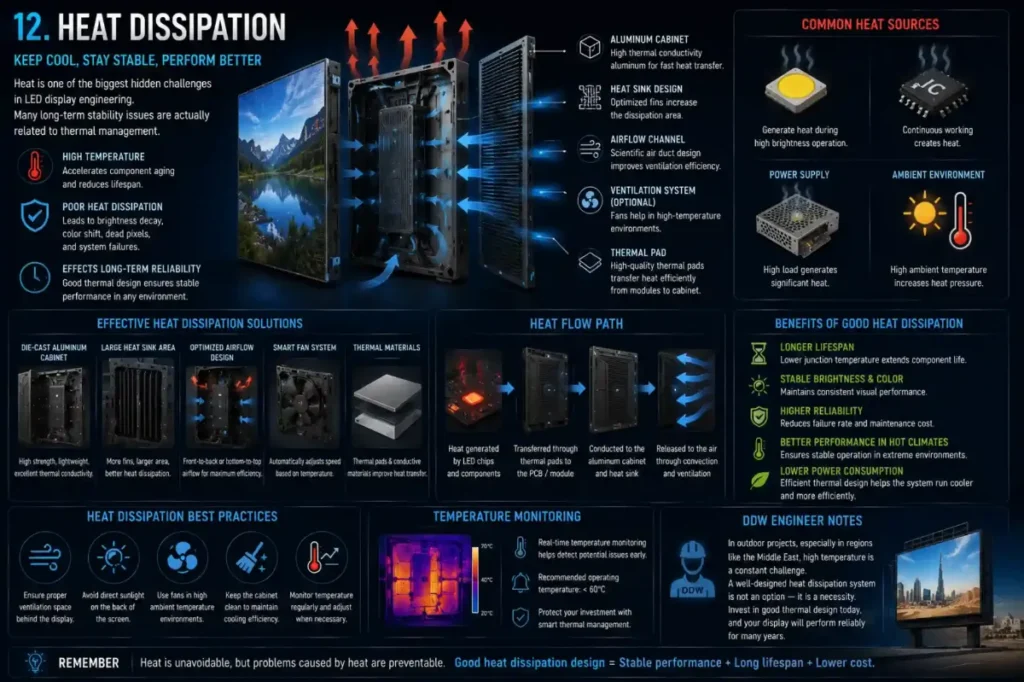
چرا گرما چنین مشکل بزرگی است
چرا پروژههای فضای باز با فشار حرارتی بیشتری مواجه میشوند
نصبهای فضای باز باید از عهدهٔ موارد زیر برآیند:
- نور مستقیم خورشید
- دمای محیط بالا
- محیطهای کابینت بستهشده
- عملکرد مداوم
این به خصوص در موارد زیر حیاتی میشود:
- پروژههای خاورمیانه
- منطقههای گرمسیری
- تابلوهای تبلیغاتی با روشنایی بالا
روشهای رایج دفع حرارت
سیستمهای حرفهای LED معمولاً عملکرد حرارتی را از طریق موارد زیر بهینهسازی میکنند:
- ساختمانهای آلومینیومی
- طراحی جریان هوا
- سیستمهای تهویه
- مدارهای کممصرف
- بهینهسازی مواد حرارتی
DDW Engineer Notes: LED display heat dissipation
بسیاری از خرابیهای LED در فضای باز ناشی از خود چیپهای LED نیستند.
در عوض، گرمای بیش از حد اغلب فرسودگی بلندمدت را تسریع میکند:
- منابع تغذیه
- درایور آیسیها
- کارتهای دریافت
مدیریت حرارتی مناسب یکی از مهمترین پایههای قابلیت اطمینان سیستمهای LED است.
Cooling Methods Compared
| Method | Best For | یادداشتها |
|---|---|---|
| Fanless (passive) | Indoor, rental, fine pitch | Silent; relies on aluminum cabinets |
| Fans | Outdoor cabinets | Need dust filters and maintenance |
| Air conditioning | Enclosed outdoor structures | Controls temperature and humidity |
| Common cathode | All types | Reduces heat at the source |
FAQ
What temperature is safe for an LED display?
Most LED displays operate within about -20 °C to +50 °C ambient; internal temperatures should be kept well below component limits.
Do outdoor LED screens need air conditioning?
Large enclosed outdoor LED structures in hot climates often do; open-back or well-ventilated designs may only need fans.
How does heat affect LED lifespan?
Higher temperatures accelerate LED brightness decay and component aging, shortening the LED screen’s useful life.
Related LED Display Guides
- Common cathode vs common anode LED
- Energy-saving LED display technology
- LED screen lifespan
- LED display brightness (nits)
Recommended DDW products: FC Series energy-saving outdoor LED screen · FA Series outdoor LED screen