
Quick answer: Heat is a main cause of LED screen failure, color shift and shortened lifespan. LED displays are cooled through aluminum cabinets and module design (passive cooling), fans or air conditioning for enclosed outdoor structures, and energy-efficient designs like common cathode that produce less heat in the first place.
تبديد الحرارة
تعد الحرارة أحد أكبر التحديات الخفية في هندسة شاشات LED.
ترتبط العديد من مشكلات الاستقرار على المدى الطويل في الواقع بإدارة الحرارة.
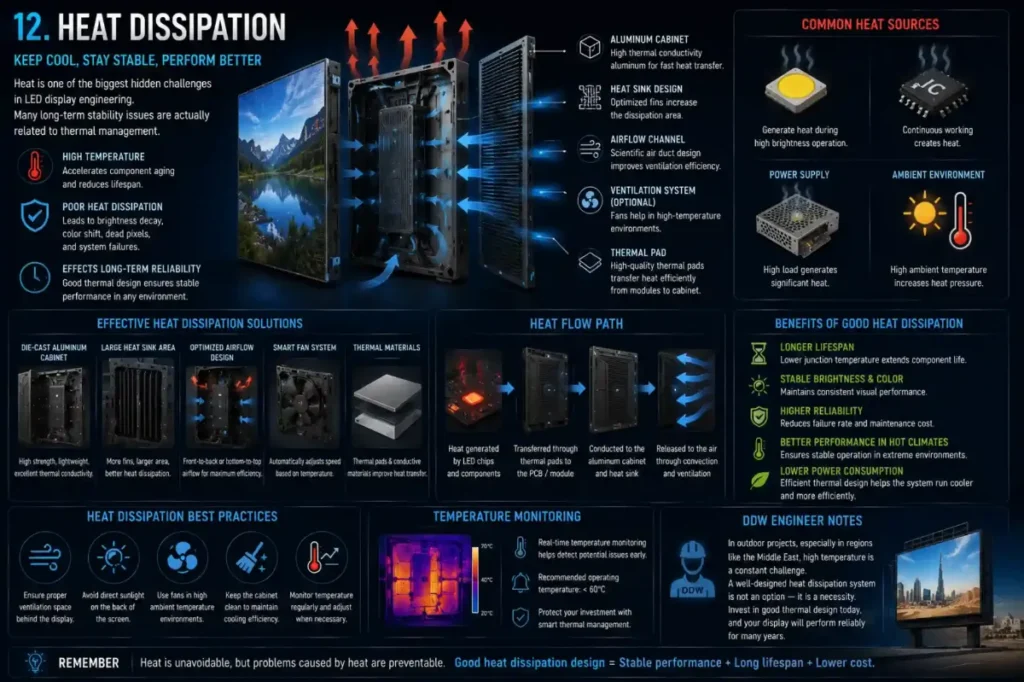
لماذا تُعد الحرارة مشكلة كبيرة إلى هذا الحد؟
لماذا تواجه المشاريع الخارجية ضغوطًا حرارية أكبر
يجب أن تتحمل التركيبات الخارجية ما يلي:
- أشعة الشمس المباشرة
- ارتفاع درجة الحرارة المحيطة
- بيئات الخزانات المغلقة
- التشغيل المستمر
ويصبح هذا الأمر بالغ الأهمية بشكل خاص في:
- مشاريع الشرق الأوسط
- المناطق الاستوائية
- لوحات إعلانية عالية السطوع
طرق تبديد الحرارة الشائعة
عادةً ما تعمل أنظمة LED الاحترافية على تحسين الأداء الحراري من خلال:
- الهياكل الألومنيومية
- تصميم تدفق الهواء
- أنظمة التهوية
- دوائر موفرة للطاقة
- تحسين الخصائص الحرارية للمواد
DDW Engineer Notes: LED display heat dissipation
لا ترجع أسباب العديد من أعطال مصابيح LED الخارجية إلى رقائق LED نفسها.
بل إن ارتفاع درجة الحرارة غالبًا ما يُسرّع من عملية الشيخوخة على المدى الطويل في:
- مصادر الطاقة
- دوائر متكاملة للتحكم في المحركات
- بطاقات الاستلام
تعد الإدارة الحرارية الجيدة أحد أهم ركائز موثوقية أنظمة LED.
Cooling Methods Compared
| Method | الأفضل لـ | Notes |
|---|---|---|
| Fanless (passive) | Indoor, rental, fine pitch | Silent; relies on aluminum cabinets |
| Fans | Outdoor cabinets | Need dust filters and maintenance |
| Air conditioning | Enclosed outdoor structures | Controls temperature and humidity |
| Common cathode | All types | Reduces heat at the source |
FAQ
What temperature is safe for an LED display?
Most LED displays operate within about -20 °C to +50 °C ambient; internal temperatures should be kept well below component limits.
Do outdoor LED screens need air conditioning?
Large enclosed outdoor LED structures in hot climates often do; open-back or well-ventilated designs may only need fans.
How does heat affect LED lifespan?
Higher temperatures accelerate LED brightness decay and component aging, shortening the LED screen’s useful life.
Related LED Display Guides
- Common cathode vs common anode LED
- Energy-saving LED display technology
- LED screen lifespan
- LED display brightness (nits)
Recommended DDW products: FC Series energy-saving outdoor LED screen · FA Series outdoor LED screen