
Quick answer: SMD (Surface-Mounted Device) packs red, green and blue chips into one LED, enabling fine pixel pitch, wide viewing angles and better color uniformity — the mainstream for indoor and most outdoor LED screens. DIP (Dual In-line Package) uses separate through-hole LEDs with very high brightness, now mainly used in large-pitch outdoor LED displays.
Pemahaman Pokok
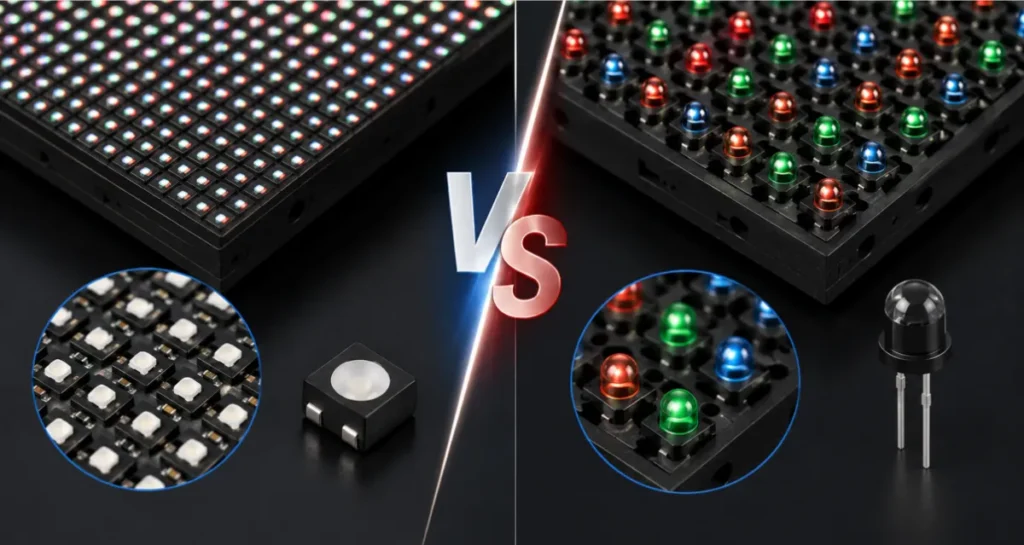
SMD dan DIP adalah dua teknologi pengemasan LED yang umum digunakan pada layar LED.
Setiap teknologi menawarkan keunggulan yang berbeda-beda, tergantung pada lingkungan penerapannya.
Mengapa SMD Menjadi Teknologi LED yang Paling Populer
SMD (Surface Mounted Device) menggabungkan chip RGB ke dalam satu kemasan yang ringkas.
Keunggulan:
- Konsistensi warna yang lebih baik
- Sudut pandang yang lebih luas
- Resolusi yang lebih tinggi
- Cocok untuk layar dengan jarak piksel rapat di dalam ruangan
Aplikasi umum:
- Layar LED dalam ruangan
- Penyewaan layar LED
- Ruang rapat
- Lingkungan ritel
Mengapa DIP Masih Digunakan dalam Proyek-Proyek Luar Ruangan
DIP (Dual In-line Package) menggunakan lampu LED terpisah yang dipasang melalui PCB.
Keunggulan:
- Kecerahan yang lebih tinggi
- Better waterproof capability (higher LED screen IP rating)
- Ketahanan yang tinggi di luar ruangan
Aplikasi umum:
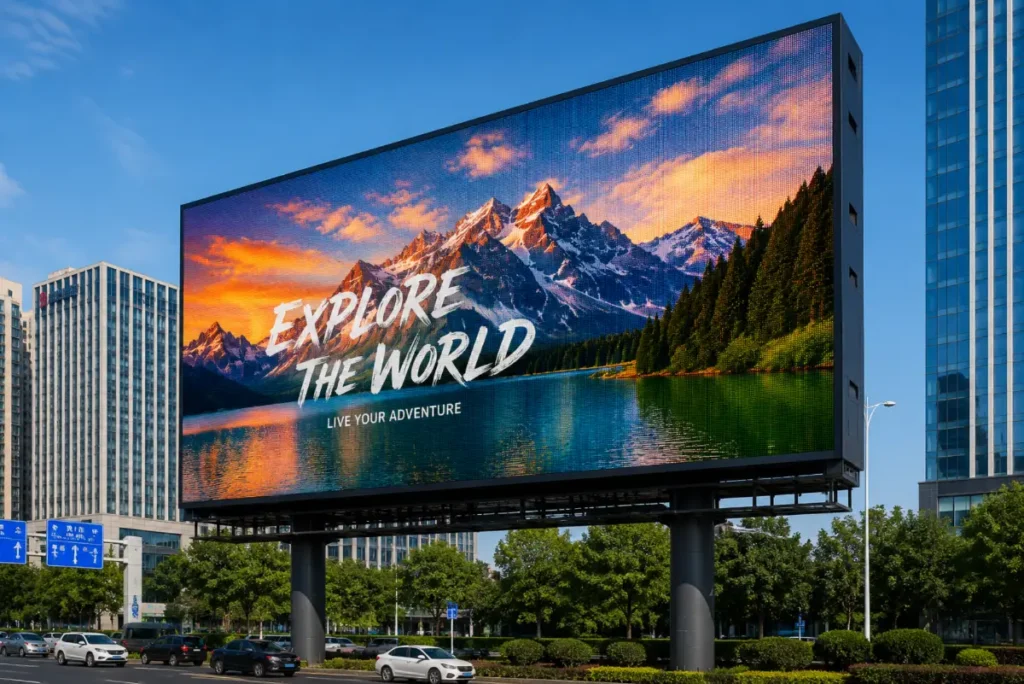
- Papan iklan luar ruang
- Rambu-rambu jalan raya
- Layar di stadion
Perbedaan Utama
| Fitur | SMD | DIP |
| Sudut Pandang | Lebih luas | Lebih sempit |
| Kecerahan | Sedang | Lebih tinggi |
| Resolusi | Lebih tinggi | Lebih rendah |
| Latihan Ketahanan di Luar Ruangan | Bagus | Sangat bagus |
| Aplikasi | Dalam Ruangan / Sewa Luar Ruangan | |
Teknologi mana yang lebih tepat untuk proyek-proyek nyata?
Pilih SMD jika:
- Diperlukan kualitas gambar yang tinggi
- Jarak pandang yang dekat
- Aplikasi di dalam ruangan
- Proyek XR atau siaran
Pilih DIP jika:
- Diperlukan kecerahan yang sangat tinggi di luar ruangan
- Pengamatan jarak jauh
- Lingkungan luar ruangan yang keras
SMD vs DIP vs COB vs MIP
Beyond SMD and DIP, two newer LED packaging technologies now dominate fine-pitch LED display screens:
| Technology | Jarak Piksel Standar | Strengths | Paling Cocok Untuk |
|---|---|---|---|
| DIP | P10–P20+ | Very high brightness, rugged | Large outdoor billboards |
| SMD | P1.2–P10 | Balanced cost, color and viewing angle | Most indoor and outdoor LED screens |
| COB | P0.6–P1.9 | Sealed surface, impact and moisture resistant, deep black | Control rooms, meeting rooms, fine-pitch LED video walls |
| MIP | P0.4–P1.5 | Chip-level sorting for uniformity, repairable | Micro LED displays, broadcast, XR studios |
In short: SMD remains the most cost-effective choice above P1.5, while COB and MIP are the better options for LED displays below P1.2.
DDW Technical Insight: SMD vs DIP LED Screen
SMD mendominasi aplikasi dalam ruangan dan penyewaan modern, sementara DIP masih memiliki keunggulan di lingkungan luar ruangan dengan tingkat kecerahan tinggi.
FAQ
Is SMD or DIP better for an LED display?
SMD is better for most LED displays because it offers finer pixel pitch, wider viewing angles and better image quality. DIP is only preferred for very bright, large-pitch outdoor screens.
Why is DIP brighter than SMD?
DIP LEDs use separate, focused red, green and blue lamps that deliver very high brightness, but with narrower viewing angles.
What comes after SMD in LED screen technology?
COB (Chip on Board) and MIP (Mini/Micro LED in Package) are used for fine-pitch LED displays below P1.2 for better protection and contrast.
Related LED Display Guides
- COB vs SMD vs GOB vs MIP comparison
- What is an LED display
- Indoor vs outdoor LED display
- LED screen IP rating
- LED display brightness (nits)
- LED display pixel pitch explained
- COB LED display technology
- MIP LED display technology
Recommended DDW products: FA Series outdoor LED screen · KCOB Series COB LED video wall