
Quick answer: Retail digitalization uses LED displays to attract shoppers and deliver dynamic content: bright window-facing screens, transparent LED on shopfront glass, eye-catching 3D displays, in-store video walls and centrally scheduled content that can be linked to promotions and customer data.
Retail Digitalization
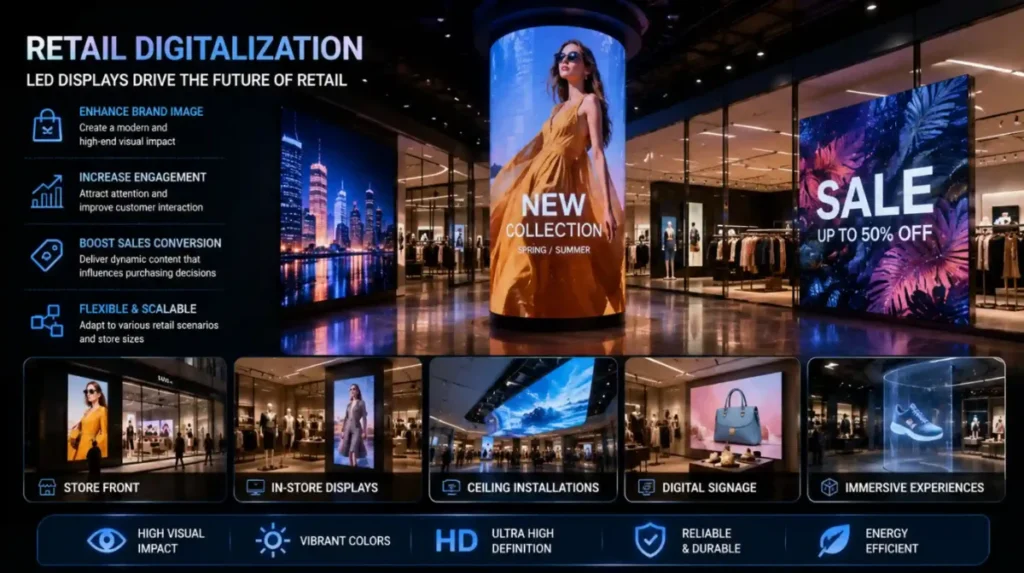
Retail environments are rapidly shifting from static physical spaces toward immersive digital experiences.
LED displays are becoming one of the core technologies driving this transformation.
Why Retail Is Changing
Modern consumers increasingly expect:
- immersive experiences
- dynamic content
- personalized interaction
- premium visual environments
Traditional printed advertising can no longer provide the same level of engagement.
This is why many retail spaces now integrate:
- fine-pitch LED walls
- transparent LED
- curved LED
- interactive digital systems
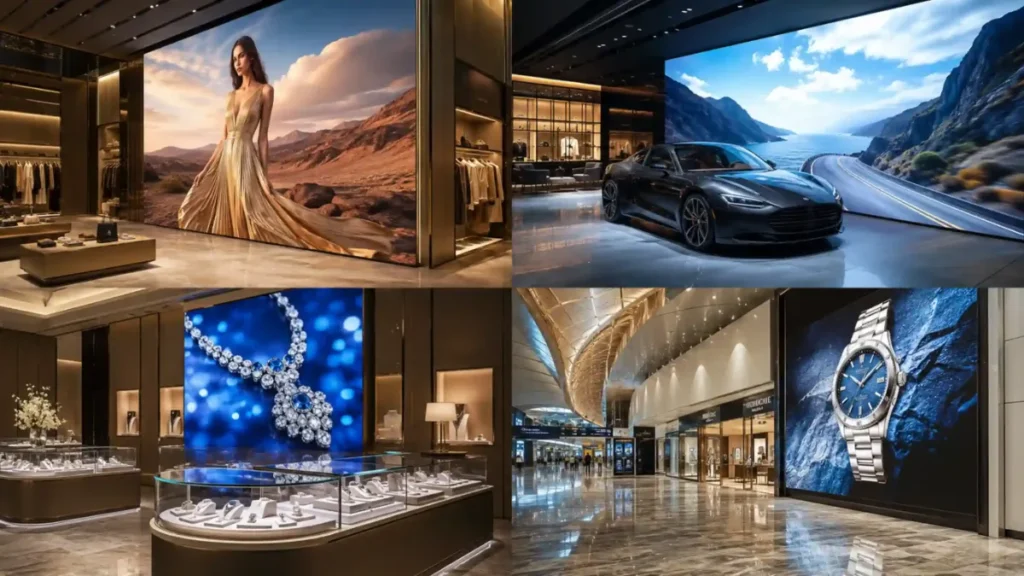
Why Luxury Retail Prefers Fine-Pitch LED
Luxury brands focus heavily on:
- image precision
- color consistency
- elegant integration
- premium atmosphere
This is especially important in:
- flagship stores
- automotive showrooms
- jewelry boutiques
- fashion retail
- airport luxury retail
Fine-pitch COB and Micro LED technologies are becoming increasingly popular in these environments.
Why Retail LED Is Becoming More Architectural
Modern LED systems are no longer treated only as “screens.”
They are increasingly integrated into:
- store architecture
- interior design
- customer experience
- brand storytelling
This is why retail projects increasingly prioritize:
- ultra-thin cabinets
- seamless integration
- hidden structures
- elegant visual appearance
Why Retail Data Integration Is Growing
Future retail displays may increasingly integrate with:
- AI-driven advertising
- audience analysis
- smart retail systems
- real-time marketing content
This creates stronger interaction between digital content and customer behavior.
DDW Engineer Notes: Retail digitalization with LED displays
Many retail projects fail because the LED screen visually dominates the environment instead of supporting the brand experience.
In luxury retail environments, subtle integration and visual elegance are often far more important than aggressive brightness or oversized screens.
Retail LED Display Trends
| Trend | What Is Changing | What It Means for Buyers |
|---|---|---|
| Window screens | High-brightness LED behind glass | Attract passers-by day and night |
| Transparent LED | LED film on shopfronts | Keep store visibility while advertising |
| 3D displays | Naked-eye 3D content | Stronger brand impact and social sharing |
| Central content | Cloud scheduling across stores | Consistent campaigns, lower staff effort |
| Data-driven content | Content linked to sales and traffic | More relevant promotions |
FAQ
How do LED displays help retail stores?
They attract attention, promote products dynamically and allow fast content updates across many stores.
Is transparent LED good for shop windows?
Yes. Transparent LED film shows bright content while keeping the store interior visible.
What is naked-eye 3D LED in retail?
Corner or curved LED displays with special content that creates a 3D effect without glasses, used for high-impact brand campaigns.
Related LED Display Guides
- Naked-eye 3D LED display trends
- Retail LED displays
- Transparent LED display technology
- The future of LED displays
- LED display price per square meter
Recommended DDW products: TAD Series transparent LED film screen · 3DH Series transparent LED film display