
Quick answer: Transparent LED displays place LED strips or chips on a clear or open structure so viewers can see through the screen, typically with 60–90% transparency. They are used on glass windows, storefronts and building facades, combining bright visuals with daylight and visibility, and are much lighter and better ventilated than conventional LED screens.
Transparent LED Technology
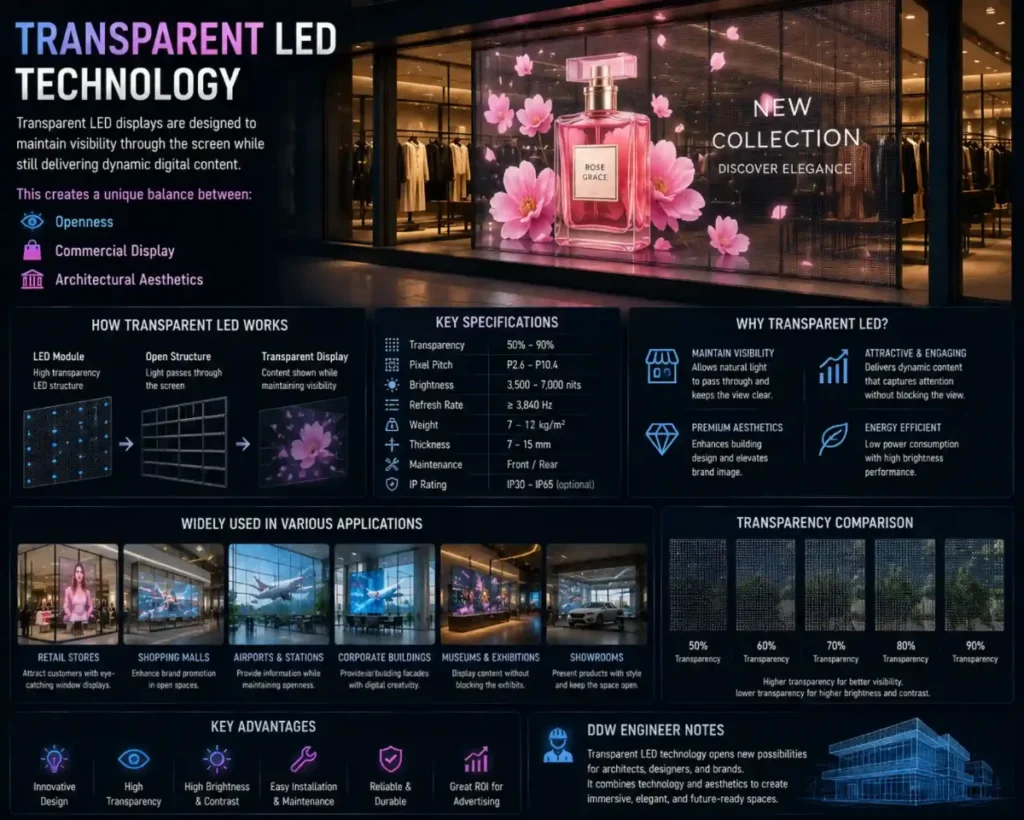
Transparent LED displays are designed to maintain visibility through the screen while still delivering dynamic digital content.
This creates a unique balance between:
- openness
- commercial display
- architectural aesthetics
Why Transparent LED Is Popular in Retail
Luxury retail environments often want digital impact without completely blocking storefront visibility.
Transparent LED technology allows brands to:
- attract attention
- preserve natural lighting
- maintain store visibility
- create futuristic visual experiences
This is especially popular in:
- shopping malls
- flagship stores
- airport retail
- commercial glass facades
Why Weight and Ventilation Matter
Transparent LED systems usually provide:
- lighter structures
- better airflow
- lower wind resistance
This becomes particularly important in large glass facade projects.
DDW Engineer Notes: Transparent LED display technology
Transparent LED projects often prioritize architectural integration more than pure resolution.
In many premium commercial environments, overall visual elegance matters more than extremely fine pixel pitch.
The goal is creating a seamless combination of:
- architecture
- branding
- digital media
Transparent LED Types Compared
| Type | Transparency | Typical Use |
|---|---|---|
| LED film (adhesive) | High, very thin | Retail windows, glass partitions |
| Transparent LED panel | 60–80% | Showrooms, stages, atriums |
| LED mesh / curtain | Very high | Building facades, large outdoor areas |
FAQ
How transparent is a transparent LED screen?
Most transparent LED displays offer about 60–90% transparency depending on pixel pitch and structure.
Can transparent LED displays be used in daylight?
Yes. Many window-facing transparent LED screens reach 2,000–5,000 nits for visibility behind glass.
What is an LED film screen?
A very thin, flexible transparent LED display that adheres directly to glass, used mainly for retail windows.
Related LED Display Guides
- Flexible LED display technology
- LED display brightness (nits)
- LED display heat dissipation
- Retail LED displays
Recommended DDW products: TAD Series transparent LED film screen · FC Series energy-saving outdoor LED screen